
Two men, Emiliano Galvez and Wrackkie Quiogue, are facing federal charges after allegedly throwing Molotov cocktails at Los Angeles police officers during the recent Los Angeles protests against Immigration and Customs Enforcement (ICE).
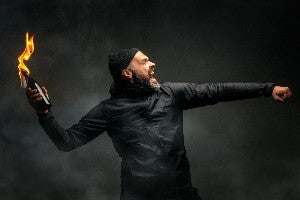
The two men are charged with the possession of unregistered destructive devices and may face up to 10 years in prison if convicted.
These arrests come amid nationwide protests, most of which remain peaceful, but the actions attributed to these individuals underscore the potential severe consequences of criminal behavior during public demonstrations.
The allegations against Quiogue state that during a protest in downtown Los Angeles, he armed himself with a Molotov cocktail and attempted to flee when approached by law enforcement.
After their arrests, Galvez and Quiogue will likely go through a series of legal proceedings, including arraignment, pre-trial motions, and trial. If found guilty, they could face up to 10 years in federal prison.
Similarly, Galvez is accused of throwing a lit Molotov cocktail over a wall toward Los Angeles sheriff's deputies during a protest in the city of Paramount. Both suspects were apprehended after brief chases.
These arrests highlight a line prosecutors are keen to draw between lawful protest and illegal conduct. While most demonstrators act peacefully and in accordance with their constitutional rights, it's crucial to be aware that crossing into criminal activity can expose individuals to serious legal consequences under state and/or federal law.
What is a Destructive Device?
26 U.S. Code 5845(f) classifies certain weapons, such as a Molotov cocktail, as "destructive devices" which are subject to the registration and tax provisions of the National Firearms Act (NFA).
Section 5845(f)(2) provides says, "The term destructive device means any type of weapon by whatever name known which will, or which may be readily converted to, expel a projectile by the action of an explosive or other propellant, the barrel or barrels of which have a bore of more than one-half inch in diameter."

A Molotov cocktail is a hand-thrown incendiary weapon consisting of a frangible container filled with flammable substances and equipped with a fuse, typically a glass bottle filled with flammable liquids sealed with a cloth wick.
In use, the fuse attached to the container is lit, and the weapon is thrown, shattering on impact. This ignites the flammable substances contained in the bottle and spreads flames as the fuel burns.
Due to their relative ease of production, Molotov cocktails are typically improvised weapons. Their improvised usage includes criminals, gangsters, rioters, and protesters.
In the United States, Molotov cocktails are illegal. They are classified as a "destructive device" by the Federal Bureau of Alcohol, Tobacco, Firearms, and Explosives (ATF), making their possession a federal offense.
Legal Context of the Federal Charges
Galvez and Quiogue face charges under 26 U.S.C. § 5861, a federal statute governing the possession, manufacture, and transfer of certain firearms and destructive devices.

This law is part of the National Firearms Act (NFA), which primarily aims to regulate dangerous weapons and ensure public safety by requiring these items to be registered.
The NFA, enacted in 1934, primarily aims to regulate dangerous weapons and ensure public safety by requiring these items to be registered. It covers a wide range of firearms and destructive devices, including those classified as 'destructive devices' under 26 U.S. Code 5845(f).
Under § 5861(d), it is a federal offense to possess a firearm or destructive device that has not been registered with the Bureau of Alcohol, Tobacco, Firearms, and Explosives (ATF).
The definition of a destructive device includes explosive, incendiary, or poison gas devices such as bombs, grenades, etc.
The statute's intent is clear: possession alone of such an unregistered device constitutes a criminal act, regardless of whether or not the device is actively used in an attack. To secure a conviction under this statute, prosecutors must prove:
- The defendant knowingly possessed the item.
- The item qualifies as a destructive device under federal law.
- The device was unregistered.
What is a Molotov Cocktail?
The term "destructive device" encompasses weapons like Molotov cocktails, as their design and function directly align with the statute's definitions. A typical Molotov cocktail-a bottle filled with flammable liquid and capped with a cloth wick-is considered inherently dangerous and lethal, meeting the criteria for an unregistered destructive device under the NFA.
Any conviction under 26 U.S.C. § 5861 can carry significant penalties, including fines and up to 10 years in federal prison. The severity of the punishment underscores the government's stance on deterring the manufacture, possession, or misuse of such devices, particularly in the heightened context of public demonstrations.
Interestingly, Galvez and Quiogue are not specifically charged with using the Molotov cocktails against law enforcement but rather for possessing the devices themselves. One potential reason for this is that this specific charge enables the two to be charged under federal rather than state law, allowing for more severe penalties.
Federal jurisdiction in these cases relies solely on the existence of the unregistered weapons, eliminating the need for prosecutors to demonstrate intent to use them for violence.
What Does Federal Law Say?
26 U.S. Code § 5861 - Prohibited acts says, It shall be unlawful for any person-
(a) to engage in business as a manufacturer or importer of, or dealer in, firearms without having paid the special (occupational) tax required by section 5801 for his business or having registered as required by section 5802; or
(b) to receive or possess a firearm transferred to him in violation of the provisions of this chapter; or
(c) to receive or possess a firearm made in violation of the provisions of this chapter; or
(d) to receive or possess a firearm which is not registered to him in the National Firearms Registration and Transfer Record; or
(e) to transfer a firearm in violation of the provisions of this chapter; or
(f) to make a firearm in violation of the provisions of this chapter; or
(g) to obliterate, remove, change, or alter the serial number or other identification of a firearm required by this chapter; or
(h) to receive or possess a firearm having the serial number or other identification required by this chapter obliterated, removed, changed, or altered; or
(i) to receive or possess a firearm which is not identified by a serial number as required by this chapter; or
(j) to transport, deliver, or receive any firearm in interstate commerce which has not been registered as required by this chapter; or
(k) to receive or possess a firearm which has been imported or brought into the United States in violation of section 5844; or
(l) to make, or cause the making of, a false entry on any application, return, or record required by this chapter, knowing such entry to be false.
Implications for Protestors
The arrests of these two individuals should serve as a reminder of the legal risks associated with protests when participants engage in unlawful activity. Protesting peacefully is a protected right under the First Amendment, but the situation can change dramatically when alleged crimes occur.
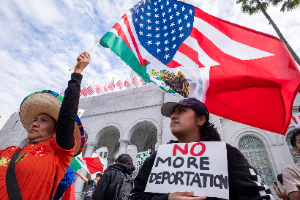
Because the protests themselves are against the activities of federal law enforcement officers (namely, ICE), the federal government has a keen interest in asserting jurisdiction in these cases whenever the alleged behavior justifies it. In such cases, the consequences can be severe.
Whether or not Molotov cocktails were thrown at law enforcement, the mere act of possessing one placed these two individuals under federal scrutiny.
Even if the two had not allegedly thrown the devices, this case illustrates that an individual's intentions or motivations may not shield them from prosecution if their actions violate strict federal weapons regulations.
Even those unaware that possessing such devices is illegal can face harsh penalties under the law.
The Importance of Legal Representation
Suppose you find yourself arrested during one of these protests. In that case, we cannot overstate the importance of hiring an experienced federal criminal defense attorney, especially considering the risk of federal charges (which typically carry more severe penalties than local or state violations).
A knowledgeable attorney can evaluate the prosecution's evidence, identify potential procedural missteps, and craft an effective defense strategy to maximize your chances of a favorable outcome. For more information, contact our federal criminal defense law firm, Eisner Gorin LLP, located in Los Angeles, CA.
Related Content:
