
What Happens During a Federal Criminal Trial?
Facing a federal criminal charge can be an intimidating experience, especially considering the potential for significant penalties if you are convicted. Once a case proceeds past the pretrial motions and plea negotiations, the next phase is the trial itself.
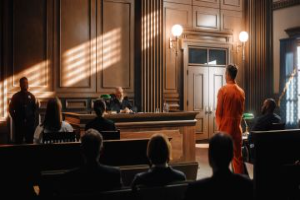
A federal trial is a structured process governed by specific rules of evidence and procedure. Understanding the various stages of the trial can help demystify the process and prepare you for what lies ahead.
The trial begins with jury selection, a process known as "voir dire."
The objective is to impanel an impartial jury of your peers who will hear the evidence and decide the facts of the case. The jury pool is drawn from a cross-section of the community.
During voir dire, the judge and attorneys for both the prosecution and the defense will question potential jurors.
The purpose of these questions is to uncover any biases or prejudices that might prevent a juror from being fair and impartial. Attorneys may challenge jurors "for cause," arguing to the judge that a specific juror cannot be objective.
Each side also has a limited number of "peremptory challenges," which allow them to excuse a juror without providing a reason, provided the excuse is not based on race, ethnicity, or sex. This process continues until a full jury, plus alternates, is selected.
Key Takeaways
- A federal criminal trial includes jury selection, opening statements from both sides, and the presentation of evidence such as witness testimony and exhibits.
- The prosecution must prove guilt beyond a reasonable doubt, reassuring the audience that the trial aims for a just and thorough determination of guilt.
- Jury selection involves questioning potential jurors to detect and dismiss biases, ensuring the jury remains impartial.
- Opening statements are when both the prosecution and defense present their initial arguments, outlining what they intend to prove during the trial.
- The prosecution starts by laying out its case, offering evidence and calling witnesses to prove the defendant's guilt.
- The defense might challenge the prosecution's evidence through witness cross-examination or by offering its own witnesses and evidence to refute the allegations.
- Closing arguments involve each side summarizing their case and presenting their final statements to the jury.
- Jury instructions refer to the judge providing legal guidance to help the jury interpret and apply the law to the facts of the case.
- Jury deliberations and verdict involve the jury discussing privately to reach a unanimous decision. If they agree, the verdict is announced publicly in court.
- A subpoena ad testificandum is a powerful legal tool used in civil and criminal cases to compel a person to appear and testify under oath.
Let's review in detail the most basic steps in a federal criminal trial below.
Opening Statements
Once the jury is sworn in, the trial officially begins with opening statements. The prosecutor for the government goes first, followed by the federal criminal defense attorney. An opening statement is not evidence; it is a roadmap.
Each attorney outlines the facts they intend to prove and previews the evidence they will present. The prosecutor will explain how the evidence will show the defendant's guilt beyond a reasonable doubt.
In contrast, the defense will explain why the government's case is flawed or how the evidence will demonstrate the defendant's innocence.
Presentation of Evidence (Government's Case-in-Chief)
Following opening statements, the prosecution presents its case-in-chief. The government bears the burden of proving the defendant's guilt beyond a reasonable doubt.

To meet this burden, the prosecutor will present evidence, including witness testimony, documents, physical objects, and expert opinions.
The prosecutor will call witnesses to the stand for direct examination. After each witness testifies, the defense has the right to cross-examine them.
Cross-examination is a critical tool for testing the truthfulness and accuracy of a witness's testimony, exposing inconsistencies, and highlighting potential motives to lie.
After cross-examination, the prosecutor may conduct a brief redirect examination to clarify any points raised during the cross-examination.
The Defense Case
After the government "rests" its case, the defense can present its own evidence and witnesses.
The defendant is not required to prove their innocence or present any evidence. The Fifth Amendment to the U.S. Constitution protects a defendant from being compelled to testify.
If the defense chooses to present a case, the process mirrors the prosecution's case-in-chief. The defense attorney will call witnesses for direct examination, and the prosecutor will cross-examine them.
The defense may present evidence to challenge the government's claims, establish an alibi, or support an affirmative defense.
Closing Arguments
After both sides have presented all their evidence, the prosecution and defense attorneys deliver their closing arguments. Similar to opening statements, closing arguments are not evidence.
Instead, they are the attorneys' final opportunity to persuade the jury. The prosecutor will argue that the evidence presented proves the defendant's guilt beyond a reasonable doubt.
The defense attorney will summarize the evidence in a light most favorable to the defendant, highlighting weaknesses in the government's case and arguing why the jury should find the defendant not guilty.
Jury Instructions
Before the jury begins its deliberations, the judge provides them with a set of legal instructions. These instructions explain the relevant laws that apply to the case and define the elements of the charged offenses.
The judge also instructs the jury on the standard of proof-beyond a reasonable doubt-and reminds them of their duty to be impartial and base their decision solely on the evidence presented in court.
Deliberation and Verdict
The jury then retires to a private room to deliberate. During deliberations, jurors review the evidence, discuss the testimony, and work toward a unanimous decision. They may send questions to the judge for clarification on legal matters.
Deliberations continue until the jury reaches a unanimous verdict. In a federal criminal case, the verdict must be unanimous. If they find the defendant guilty, the case proceeds to sentencing. If they find the defendant not guilty, the case ends in an acquittal.
If the jury cannot reach a unanimous decision, the judge may declare a mistrial, which could lead to a new trial with a different jury.
Federal Sentencing
The case proceeds to sentencing if the defendant pleads guilty or is convicted at trial. The judge, without a jury, will consider the sentencing recommendations from the U.S. probation officer and evaluate the facts and law in accordance with the
Federal Sentencing Guidelines, judicial discretion, and constitutional limits. Before sentencing, the defendant and their lawyer will have an opportunity to speak to the court.
Supervised Release
If sentenced, the judge might also impose supervised release after incarceration. This means the defendant, while no longer in prison, must follow certain conditions and restrictions to support their lawful reintegration into society.
Typical conditions include a court order prohibiting violations of the law, passing drug tests, and ongoing supervision by the U.S. Probation Office.
Federal Appeals
Trial convictions and, to a lesser extent, sentences from pleas can be appealed. An appeal seeks review by the U.S. Court of Appeals to consider potential errors.
Common grounds for appealing a federal conviction or sentence include undisclosed exculpatory evidence, improperly obtained evidence, and the misuse of the judge's sentencing powers.
For more information and a case review, contact the federal criminal defense lawyers at Eisner Gorin LLP.