
Mississippi Federal Criminal Defense Lawyers
Being charged with a federal crime in Mississippi is a matter of utmost seriousness. Cases tried in the U.S. District Courts for the Northern and Southern Districts of Mississippi present unique and severe challenges, underscoring the gravity of the situation.
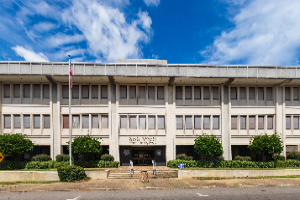
These courts operate under rigorous federal rules, handle offenses with higher stakes, and often impose severe penalties in the event of a conviction, such as lengthy prison sentences, substantial fines, and the loss of certain rights and privileges.
When you're facing federal charges, it's not the time for inexperienced representation. You need a defense attorney who is well-versed in federal criminal law and can vigorously defend you against federal charges.
A seasoned defense attorney can navigate the complex federal court system, challenge the prosecution's evidence, and negotiate for the best possible outcome on your behalf.
Proven Track Record
At Eisner Gorin LLP, we have a proven track record of handling numerous cases and successfully defending our clients against federal charges. Our team of federal criminal defense attorneys is not just highly trained but also deeply experienced, providing you with the confidence that you need in your legal representation.
Federal crimes, prosecuted in federal court and governed by federal law, are significantly more serious than state crimes and carry more severe penalties. This underscores the need for specialized legal assistance when facing federal charges.
If you're accused of a federal crime in Mississippi, having a seasoned defense attorney who is well-versed in this environment can make a significant difference in safeguarding your rights and achieving the best possible outcome.
What to Know About Federal Criminal Cases
Federal crimes are typically prosecuted by federal agencies such as the Drug Enforcement Administration (DEA), the Bureau of Alcohol, Tobacco, Firearms, and Explosives (ATF), or the Federal Bureau of Investigation (FBI).

However, state and local law enforcement can also make a federal case out of a crime committed in their jurisdiction.
While federal courts deal with both civil and criminal cases, the criminal cases adjudicated by these courts typically involve violations of federal statutes, crimes that cross state/international boundaries or affect interstate commerce, and crimes that occur on federal lands or international waters.
Crimes committed locally in violation of state statutes are usually handled by the state courts. Federal sentencing guidelines determine penalties for federal crimes.
These guidelines provide a framework for judges to assess the severity of the offense and determine the appropriate punishment. Federal penalties can include imprisonment in federal prisons, fines, probation, and asset forfeiture.
Common Types of Federal Criminal Cases
Below are some of the most common offenses prosecuted within the U.S. District Courts for the Northern and Southern Districts of Mississippi:
- Drug trafficking. The illegal distribution, sale, transportation, or importation of controlled substances across state or international borders. Federal agencies such as the Drug Enforcement Administration (DEA) investigate and prosecute drug trafficking cases.
- Money laundering. The process of concealing the origins of illegally obtained money by making it appear as if it came from legitimate sources. Money laundering cases involve complex financial transactions and can have ties to organized crime, drug trafficking, or other illicit activities.
- Bank robbery. The act of unlawfully taking or attempting to take money or property from a bank, credit union, or savings and loan association by force, intimidation, or violence. Bank robbery falls under federal jurisdiction due to the involvement of federally insured banks.
- White-collar crimes. These include fraud, embezzlement, and insider trading.
- Identity theft. The fraudulent use of another person's personal identifying information, such as Social Security numbers or financial data, to commit financial fraud or other crimes. Identity theft cases involving interstate or international elements may be prosecuted at the federal level.
- Federal firearms offenses. Violations of federal laws regarding the possession, sale, transportation, or use of firearms, including illegal possession of firearms by convicted felons, illegal trafficking of firearms, or possession of firearms in prohibited areas like schools or government buildings.
- Child exploitation offenses. These include possession or distribution of child pornography
- Immigration-related crimes. These include illegal reentry or document fraud.
- Health care fraud. These offenses include Medicare and Medicaid violations.
- Tax evasion. The intentional act of avoiding or evading payment of federal taxes owed by illegally manipulating income, deductions, or other means to reduce tax liability. The Internal Revenue Service (IRS) is responsible for investigating and prosecuting cases of tax evasion.
- Cybercrime. Criminal activities are conducted through computer systems or networks, such as hacking, identity theft, online fraud, or the distribution of malicious software. Federal agencies such as the FBI and the Cybersecurity and Infrastructure Security Agency (CISA) investigate and prosecute federal cybercrime cases.
- Counterfeiting. The production, distribution, or use of counterfeit currency, documents, or products protected by intellectual property rights, such as counterfeit money, passports, or trademarked goods. The U.S. Secret Service investigates counterfeit currency cases, while the FBI handles other counterfeiting offenses.
- Terrorism. Acts of violence, threats, or support of activities intended to intimidate or coerce a civilian population or influence government policy, typically with a political, ideological, or religious motive. Terrorism cases typically involve the coordination of various federal agencies, including the FBI, the Department of Homeland Security (DHS), and other intelligence agencies.
Why Federal Criminal Cases Are Different
When defending against criminal charges in federal district courts, it's important to understand how these courts differ from state courts. Below are some of the key distinctions, including the process from arrest to trial:
- Standardized Rules. One of the key distinctions when defending against criminal Charges in federal district courts is the unique and standardized procedural rules, which often differ significantly from those in state courts.
- Pre-Trial Processes: Federal courts often have more stringent pre-trial requirements, including detailed discovery, motions, and evidentiary hearings.
- Sentencing Guidelines: Federal courts use the U.S. Sentencing Guidelines, which outline specific penalties for offenses, often resulting in harsher sentencing than state courts.
- Higher Conviction Rates and Prosecution Resources: Federal prosecutors are backed by expansive resources and conduct thorough investigations, leading to higher conviction rates. Many criminal federal cases are resolved through dismissal or plea bargains and never make it to trial.
- Lengthier Proceedings: Federal cases often take longer to resolve due to the complexity of investigations, legal arguments, and trial procedures.
About the Northern District of Mississippi
The Court for the Northern District of Mississippi handles federal cases originating in the 37 counties comprising roughly the northern half of the state. This court administers justice in all counties, including populous areas such as Lafayette, DeSoto, and Lee Counties.
Major cities served by the U.S. District Court for the Northern District of Mississippi include Oxford, Tupelo, and Greenville.

This district is served by four district judges (who oversee most of the criminal trials), as well as three magistrate judges (who handle many of the preliminary hearings and misdemeanor offenses).
The main courthouse is located in Oxford, with additional court locations in Aberdeen and Greenville.
Each courthouse provides essential services, including hearings, trials, and jury management, in accordance with the strict standards of federal law.
Court Locations - Northern District
Aberdeen
Thomas G. Abernethy Federal Building
301 West Commerce Street
Aberdeen, MS 39730
Greenville
Post Office and Federal Building
305 Main Street,
Greenville, MS 38701
Oxford
Federal Building
911 Jackson Avenue East
Oxford, MS 38655
About the Southern District of Mississippi
The Southern District of Mississippi covers the southern half of the state and serves cities such as Jackson, Hattiesburg, Gulfport, and Natchez.

This district serves significant portions of the state's population, covering a 45-county area. Seven full-time district judges staff the Southern District, three senior district judges (semi-retired, tenured judges who help offset the caseload), and five magistrates.
Offices in Jackson serve as the central administrative hub for the district, while the courthouses in Hattiesburg, Gulfport, and Natchez provide accessibility to defendants across the region.
Given its position in a state bordering the Gulf of Mexico, the Southern District frequently handles cases involving maritime law, drug interdictions along shipping routes, and other offenses tied to the region's unique geography.
Court Locations - Southern District
Jackson
United States District Court
Thad Cochran United States Courthouse
501 E. Court Street
Suite 2.500
Jackson, MS 39201
Hattiesburg
United States District Court
William M. Colmer Federal Building & United States Courthouse
701 North Main Street, Suite 200
Hattiesburg, MS 39401
Gulfport
United States District Court
Dan M. Russell, Jr., United States Courthouse
2012 15th Street, Suite 403
Gulfport, MS 39501
Natchez
United States Courthouse
109 South Pearl Street, 2nd Floor
Natchez, MS 39120
Why You Need a Federal Criminal Defense Attorney
Because of the high stakes involved in federal cases (and the high probability of conviction), successfully navigating these cases requires an attorney with in-depth knowledge of federal laws, court processes, and local practices.
Defending yourself in high-stakes cases heard in the Northern or Southern District of Mississippi calls for a level of knowledge that only a seasoned federal defense attorney can provide. A skilled attorney will understand how to:
- Work effectively with federal prosecutors to negotiate favorable outcomes when possible.
- Challenge evidence and procedural flaws unique to federal investigations.
- Interpret complex guidelines, such as the Federal Sentencing Guidelines, to advocate for reduced penalties.
- Tailor defense strategies to the specific practices and preferences of judges in these districts.
Additionally, hiring an attorney with a track record in Mississippi's federal courts ensures familiarity with the nuances of these specific jurisdictions. For more information, contact our federal criminal defense law firm, located in Los Angeles, CA.
Related Content: