
Michigan Federal Criminal Defense Lawyers
Our team of highly skilled federal criminal defense attorneys, with extensive experience in representing clients facing serious charges, operates in Detroit, Grand Rapids, and the U.S. District Courts for the Eastern & Western Districts of Michigan.
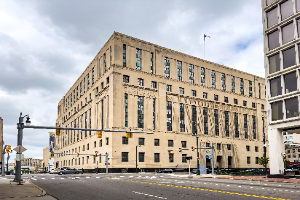
If you're facing federal criminal charges in Michigan, your case will likely be handled in the Eastern and Western Districts, depending on where you are charged.
Unlike cases heard in state courts, federal criminal cases present unique challenges with higher stakes, more complex legal procedures, and harsher sentencing guidelines.
This underscores the critical need for experienced legal representation, as the outcomes can carry life-altering repercussions, such as lengthy prison sentences and substantial fines.
The outcomes of federal criminal cases can have life-altering repercussions. This underscores the critical need for immediate and experienced legal representation.
Types of Cases We Handle
We represent public figures, politicians, professionals, company executives, business owners, and other high-profile and high-net-worth individuals who are being targeted by the Department of Justice (DOJ), Drug Enforcement Administration (DEA), Federal Bureau of Investigation (FBI), Office of Inspector General (OIG), and other federal agencies.

With our extensive experience in federal criminal cases and matters, we are well-equipped to assess our clients' exposure and begin working immediately to build a persuasive case for terminating the investigation of the federal government or acquitting you of all charges of federal crimes.
Our track record of success can provide you with the confidence you need during this challenging time.
When facing federal criminal charges in Michigan, your best hope of obtaining a fair and favorable outcome is by securing a skilled defense attorney with experience in these courts.
The right attorney will understand the intricacies of federal law, court procedures, and the high stakes involved, providing you with the best possible defense.
Overview of the Eastern District of Michigan
The U.S. District Court for the Eastern District of Michigan serves the eastern lower peninsula of Michigan.
This district serves the counties in the eastern region of Michigan's Lower Peninsula, including some of the most populated areas of the state.
To cover the case load, the Eastern District is served by 23 District Judges (who handle the bulk of criminal cases), plus 6 Magistrate Judges (who largely handle preliminary hearings and many of the misdemeanor cases).
Court Locations:
- Detroit: Theodore Levin U.S. Courthouse (main courthouse), 231 W. Lafayette Blvd., Detroit, MI 48226
- Ann Arbor: 200 E. Liberty St., Ann Arbor, MI 48104
- Bay City: 1000 Washington Ave., Bay City, MI 48708
- Flint: 600 Church St., Flint, MI 48502
- Port Huron: 526 Water St., Port Huron, MI 48060
Overview of the Western District of Michigan
The U.S. District Court for the Western District of Michigan serves many of the more rural areas of the state, including the western portion of the Lower Peninsula, plus the entire Upper Peninsula. Four District Judges and Four Magistrate Judges handle the case load for this region.
Court Locations:
- Grand Rapids (main courthouse): 110 Michigan St. NW, Grand Rapids, MI 49503
- Lansing: 315 W. Allegan St., Lansing, MI 48933
- Marquette (largely for Upper Peninsula cases): 202 W. Washington St., Marquette, MI 49855
- Kalamazoo: 410 W. Michigan Ave., Kalamazoo, MI 49007
Common Federal Criminal Cases Heard in Michigan Courts
The District Courts for the Eastern and Western Districts of Michigan address cases that fall under federal jurisdiction, such as violations of federal laws, crimes that cross state or international boundaries, and crimes occurring on federal lands.
This is in contrast to violations of Michigan's state laws, which are tried within the state court system. Common types of criminal federal cases heard in these courts include:
- Drug trafficking and drug distribution offenses.
- Fraud crimes include bank fraud, healthcare fraud, wire fraud, mail fraud, mortgage fraud, and securities fraud.
- Financial crimes, such as public corruption, bribery, tax evasion, and theft of government property.
- White-collar crimes, such as fraud, embezzlement, and money laundering.
- Cybercrimes, including identity theft, hacking, and child pornography.
- Federal tax evasion and other IRS-related offenses.
- Immigration-related crimes, such as human trafficking or unlawful reentry.
- Organized crime and racketeering (RICO cases).
- Environmental law violations, such as illegal disposal of hazardous wastes.
- Terrorism-related offenses.
- Federal firearm violations.
What If You Receive a Subpoena?
Depending on the type of subpoena you received, you might need to either appear at a specific location on a certain date or you need to produce the requested evidence for the U.S. Attorney's inspection.

Notably, subpoenas are usually broad, potentially covering hundreds of documents, and even more in some cases. While you generally need to comply with a subpoena, determining what exactly you need to provide to the U.S. Attorney is not always clear.
You want to ensure that you do not give the government the impression that you are concealing something. Still, you also do not want to provide the government with information that could shift the investigation to you.
If you receive a subpoena, it's crucial to consult with our experienced Michigan federal criminal defense lawyer to review your options. This step can help you navigate the complexities of the legal process and ensure you make informed decisions.
How Federal District Courts Differ from State Courts
Being charged with a crime at the federal level is much different than facing state criminal charges.
Federal district courts operate under different procedures and judicial guidelines, and federal offenses can result in steeper sentences compared to their state-equivalent counterparts. Some key things to note:
- Rules of Criminal Procedure: Federal courts are governed by the Federal Rules of Criminal Procedure, which differ significantly from Michigan's state-level rules.
- Prosecutors and Resources: Federal prosecutors (Assistant U.S. Attorneys) have extensive resources for building cases, often supported by federal agencies like the FBI, DEA, IRS, or Homeland Security.
- Pre-Trial Process: Federal cases typically involve rigorous investigation phases, including grand jury proceedings and complex discovery processes.
- Sentencing Guidelines: Judges rely on the Federal Sentencing Guidelines, often resulting in more severe penalties compared to state cases.
- Greater Odds of Conviction: Since federal prosecutors don't file indictments unless they've already built a solid case, you face a higher likelihood of conviction if your case proceeds to trial than in state courts. Most federal cases are resolved through plea agreements, or in some cases, through dismissals.
Why You Need a Federal Criminal Defense Attorney
Hiring a criminal defense attorney with specific experience in Michigan's federal courts is more than a wise choice; it's essential for your defense. Here's why:
- Knowledge of Federal Rules: Federal cases require deep familiarity with federal laws, rules, and complex procedures that go beyond state-level knowledge.
- Court-Specific Experience: A lawyer experienced in the Eastern and Western Districts of Michigan understands the nuances of working with federal judges, prosecutors, and court staff in these specific jurisdictions.
- Strategic Defense: Federal attorneys are skilled in developing strong defense strategies, challenging evidence, and advocating for reduced charges or sentencing.
- Negotiation Skills: If a plea bargain is determined to be in your best interests, a good attorney will know how to leverage skilled negotiation and the facts of the case to get you the most lenient terms possible.
- Resourceful Representation: An experienced federal lawyer will have access to resources, such as expert witnesses and forensic specialists, to strengthen your defense.
You are presumed innocent, and the burden to prove you guilty rests with the prosecution. Additionally, while cooperating with federal prosecutors in hopes of securing a favorable plea agreement sometimes makes sense, this should not be done without the assistance of our federal criminal defense lawyers.
For more information, contact our federal criminal defense law firm, Eisner Gorin LLP, located in Los Angeles, CA.
Related Content: