
North Carolina Federal Criminal Defense Attorneys
If you're charged with a federal crime in North Carolina, your case will most likely be heard in one of three federal court districts in the state.
Federal criminal cases heard in the U.S. District Court for the Eastern, Middle, or Western District of North Carolina are inherently more complex than those heard in the state courts.
Not all federal cases start in federal court. Many begin as state-level charges but then are indicted by a federal grand jury.
When we are retained on your case, our priority is to keep your matter out of federal court, if possible.
Our goal is to have the charges dismissed, and while this may not always be feasible, we will strive for you to face lesser charges in state or federal court.
This reduction in charges is the first step towards mitigating the potential consequences of a conviction, offering hope for a positive outcome.
Federal Crime Conviction
Federal courts operate under distinct procedures, laws, and guidelines, and the stakes are often significantly higher. Convictions in federal cases can result in harsher sentences, often involving mandatory minimums and strict sentencing guidelines.

A federal conviction can have serious and long-lasting consequences, including imprisonment, hefty fines, and a criminal record that can affect your future employment and housing opportunities.
It's crucial to understand the gravity of these potential consequences and the importance of having an experienced federal criminal defense attorney on your side.
For this reason, your best hope of prevailing in federal court is to hire a federal defense attorney with specific federal court experience. If you're facing federal charges in North Carolina, here's what you need to know.
What Makes a Crime a Federal Offense?
Most criminal conduct is illegal under both federal and state laws. While you will typically be charged under state law for an alleged crime, there is the possibility that you will be prosecuted in federal court.
The factors that can lead to being charged with a federal crime include:
- You allegedly violated a federal statute.
- You allegedly committed a crime on federal property, such as within a federal building, military base, or national park.
- Your alleged criminal activity crossed state lines.
- You were investigated and arrested by a federal agency, such as the Federal Bureau of Investigation (FBI) or the Drug Enforcement Administration (DEA).
- You were arrested based on information provided by a federal informant during a federal investigation.
Whether you are charged with a state or federal crime is a prosecutorial discretion.
Once you become aware of being under investigation, it's crucial to contact our North Carolina federal criminal defense lawyers to review the details. Early preparation is key, especially if there's a possibility of federal charges. This proactive approach puts you in control of your situation.
Common Types of Federal Criminal Cases
Federal criminal cases heard in these districts span a wide range of offenses. Below are some of the most common types prosecuted in these courts:
- White-collar crimes, such as mail or wire fraud, tax evasion, and embezzlement.
- Cybercrimes, including hacking and identity theft.
- Immigration-related offenses, such as illegal reentry
- Federal property crimes, including arson and vandalism
- Child pornography or exploitation crimes
- The Racketeer Influenced and Corrupt Organization Act (18 US Code §1961-1968) is how federal authorities charge many individuals involved in organized crime.
- Under 18 US Code §371, you may be charged with conspiracy if federal authorities gain evidence that you and at least one other person planned and took at least one overt act toward completing a specific federal crime.
- Drug trafficking and distribution conspiracies. Drug manufacturing, possessing, selling, and trafficking are illegal under federal law (21 US Code §841-865).
- Weapons charges under federal law. There are two main federal firearm charges: Felon in possession of a firearm and/or Ammunition (18 US Code § 922(g)) and possession of a firearm in furtherance of a crime of violence or drug trafficking (18 USC § 924(c)).
- Healthcare fraud, under 18 U.S.C. § 1347, which makes it a federal crime to defraud a health care benefit program or to obtain any money fraudulently.
The Federal Court Process
The federal court process is vastly different from California's criminal justice process. For federal prosecutors to charge you with a felony offense, they typically must call a grand jury.
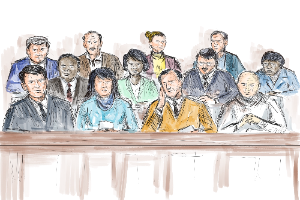
A grand jury is a group of individuals who review the evidence against you and determine whether there is enough evidence to charge you with a crime.
This is different from a trial jury, which decides whether you are guilty or not guilty.
Grand juries consist of between 12 and 23 jurors and are conducted in secret to protect the identities of the jurors and the integrity of the investigation.
If the jurors believe there is probable cause that you committed the crime, they will hand down a federal indictment. The indictment contains the specific charges against you.
The next steps in the federal criminal justice system include the following:
- Initial court appearance before a federal judge.
- Discovery phase for information and evidence.
- Plea bargaining with the federal prosecutor.
- Pretrial motions concerning evidence.
- Trial where both sides submit arguments.
- Sentencing phase if found guilty.
About the Eastern District of North Carolina
The Eastern District of North Carolina serves a 44-county stretch from Raleigh to the Atlantic Coast. This district holds court in six locations, including Raleigh, Wilmington, Wilson, Elizabeth City, Fayetteville, Greenville, and New Bern. These locations enable the court to serve a large and diverse population.
This district's judicial team is composed of appointed district court judges, who adjudicate most criminal cases and serve lifetime terms; and magistrate judges, who serve 8-year terms and preside over preliminary hearings as well as minor misdemeanor offenses.
The Eastern District of North Carolina is currently served by five district judges (including the Chief Judge) and five magistrates.
Court Locations - Eastern District
Fayetteville
Federal Building, United States Courthouse, 301 Green Street, 3rd Floor, Fayetteville, NC 28302
Greenville
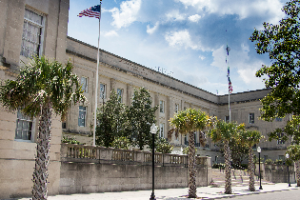
United States Courthouse, 201 South Evans St., Rm 209, Greenville, NC 27858.
New Bern
United States Post Office and Courthouse, 413 Middle St., New Bern, NC 28560.
Raleigh (District Headquarters)
Terry Sanford Federal Building and United States Courthouse, 310 New Bern Ave., Raleigh, NC 27601.
Wilmington
Alton Lennon Federal Building and Courthouse, 2 Princess Street, Wilmington, NC 28401.
About the Middle District of North Carolina
The Middle District of North Carolina covers the central portion of the state with court locations in Greensboro, Winston-Salem, and Durham.
This district covers 24 counties, serving communities in the Piedmont region of North Carolina. The judicial bench currently consists of 6 district court judges, one senior district court judge (a tenured judge who takes a lighter case load), and three magistrates.
The presence of esteemed universities and a growing tech industry in this area often leads to federal cases involving technology-related criminal charges, intellectual property disputes, and high-profile financial offenses.
Court Locations - Middle District
Greensboro
L. Richardson Preyer Courthouse, 324 W. Market Street, Greensboro, NC 27401
Winston-Salem
Hiram H. Ward Federal Building, 251 N. Main Street, Winston-Salem, NC 27101
Durham
John Hervey Wheeler Courthouse, 323 E. Chapel Hill Street, Durham, NC 27701
Overview of the Western District of North Carolina
The Western District of North Carolina includes the 32 counties located in the westernmost part of the state. This district is crucial for delivering federal legal services to the thriving business hub of Charlotte, as well as to the rural Appalachian communities located further west.
The court operates out of three key locations in Asheville, Charlotte, and Statesville, with Charlotte serving as the busiest division. The Western District is served by three district judges, three senior judges, and three magistrate judges, along with three additional judges dedicated to bankruptcy cases.

Court Locations - Western District
Charlotte
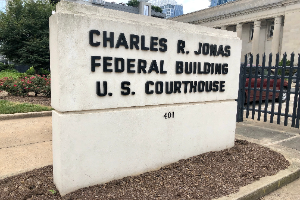
Charles R. Jonas Federal Building, 401 West Trade Street, Room 1200, Charlotte, NC 28202
Asheville
Federal Building and United States Courthouse, 100 Otis Street, Room 309, Asheville, NC 28801
Statesville
United States Courthouse, 200 West Broad Street, Rm 304, Statesville, NC 28677
Why You Need a Federal Criminal Defense Attorney
The federal court system is quite different than the state courts in North Carolina. These courts deal with federal criminal violations, crimes that cross state or international boundaries, crimes involving interstate commerce, and crimes that occur on federal property or international waters.
For this reason, federal courts differ significantly from state courts in both procedures and the stakes involved. Some of the key differences include:
- Federal Rules of Criminal Procedure: Federal courts adhere to standardized rules of procedure that guide everything from pre-trial motions to jury selection, requiring precise legal navigation.
- Pre-Trial Processes: Federal pre-trial procedures, such as grand jury indictments, are often more rigorous and complex than those at the state level.
- Sentencing Guidelines: Federal sentencing guidelines are strictly applied, leaving judges with less discretion and often resulting in harsher penalties.
- Higher Conviction Risks: Federal prosecutors have significant resources and often work with federal investigative agencies such as the FBI or DEA. This combination frequently results in a higher conviction rate for criminal cases.
Key Advantages to Having Experienced Counsel
Given these high stakes, if you're facing criminal charges to be adjudicated in the Eastern, Middle, or Western District Courts of North Carolina, it's in your best interest to hire a federal criminal defense lawyer with specific knowledge and practical experience in federal courts. Some key advantages include:
- Deep Understanding of Federal Rules: An experienced attorney is well-versed in the Federal Rules of Criminal Procedure, ensuring that every aspect of the case adheres to court requirements.
- Familiarity at the Local Level: Knowledge of the individual judges, prosecutors, and procedures specific to these districts can improve strategic planning and outcomes.
- Strong Negotiation Strategies: Federal criminal lawyers bring an ability to coordinate complex defenses, whether it involves negotiating plea deals or challenging evidence collected by federal agents.
- Sentencing Advocacy: If a conviction occurs, an attorney familiar with federal sentencing guidelines can argue for mitigating factors to secure lighter penalties.
For more information, contact our federal criminal defense law firm, Eisner Gorin LLP, located in Los Angeles, CA.
Related Content: