
Chemical Weapons Offenses (18 U.S.C. § 229)
Federal Defense for Allegations Involving Chemical Weapons
Federal chemical weapons charges are among the most serious criminal allegations in the United States. 18 U.S.C. § 229 criminalizes nearly every form of interaction with a chemical weapon—ranging from development and possession to use, threats, and conspiracy.
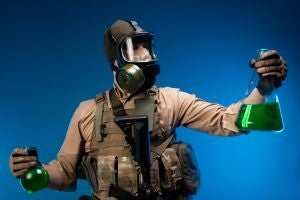
These prosecutions are treated as national security matters, often involving multiple federal agencies, classified or highly technical scientific evidence, and aggressive charging decisions. Convictions can result in life imprisonment or the death penalty.
If you are under investigation or indictment for a chemical weapons offense, you are facing a case where your liberty—and potentially your life—are at stake.
These cases often involve intricate scientific evidence, complex jurisdictional issues, and high-level government agencies.
Your best hope of avoiding the worst outcomes is with a skilled federal criminal defense attorney experienced in such matters. To schedule a consultation, call (818) 781-1570 or contact us here.
Key Takeaways: Chemical Weapons Charges Under Federal Law
-
It is illegal to develop, produce, acquire, transfer, receive, stockpile, own, possess, use, or threaten to use a chemical weapon.
-
Federal law also prohibits assisting, inducing, or conspiring to commit any chemical weapons offense.
-
Federal jurisdiction applies to conduct:
-
Occurring inside the United States
-
Committed abroad by a U.S. national
-
Targeting U.S. nationals or U.S. property anywhere in the world
-
-
Penalties include lengthy imprisonment, life sentences, and the death penalty when a death results.
What Does 18 U.S.C. § 229 Prohibit?
Title 18 U.S.C. § 229 is intentionally broad. The statute makes it unlawful for any person, acting knowingly, to engage in prohibited conduct involving chemical weapons.
Prohibited Acts Include:
-
Developing or producing chemical weapons
-
Acquiring or receiving chemical weapons by any means
-
Stockpiling or retaining chemical weapons
-
Transferring chemical weapons, directly or indirectly
-
Owning or possessing chemical weapons
-
Using or Threatening to Use a chemical weapon
-
Assisting, Encouraging, or Inducing another person to violate the statute
Even indirect involvement—such as logistical support or facilitation—can trigger prosecution.
What Counts as a “Chemical Weapon”?
To obtain a conviction, the government must prove the item at issue qualifies as a chemical weapon under the statute.
This typically includes:
-
Toxic chemicals and their precursors
-
Munitions or devices designed to cause death or serious harm through toxic chemical properties
Many chemicals have dual-use purposes, meaning they may be lawful in industrial, agricultural, medical, or research settings—but illegal if used for a prohibited purpose.
Required Elements of a Chemical Weapons Offense
To convict under 18 U.S.C. § 229, prosecutors must prove beyond a reasonable doubt:
-
The substance qualifies as a chemical weapon under federal law
-
Knowing conduct—the defendant knew the factual nature of the substance or activity
-
No applicable exemption, such as peaceful or authorized use
Importantly, the government does not need to prove you knew the specific statute—only that you knowingly engaged in the conduct.
Exemptions and Related Statutes
Certain activities are expressly excluded from criminal liability when conducted for peaceful purposes, including:
-
Industrial applications
-
Agricultural uses
-
Medical or pharmaceutical research
Related Provisions:
-
§ 229B – Criminal forfeiture and destruction of chemical weapons
-
§ 229C – Clarifies that self-defense devices (such as pepper spray) are not prohibited
Penalties and Sentencing Exposure
Chemical weapons prosecutions carry some of the harshest penalties in federal criminal law.
Potential Sentences Include:
-
Any term of years in federal prison, plus substantial fines
-
Life imprisonment if the offense results in death
-
Death penalty eligibility when a death occurs
When charged as a capital offense, the case triggers specialized procedures, including heightened evidentiary and sentencing phases.
Common Defenses in Chemical Weapons Cases
A chemical weapons charge is not unbeatable. Effective defense requires early, aggressive litigation and deep familiarity with both federal criminal law and scientific evidence.
Potential Defense Strategies Include:
Challenging the Classification of the Substance
Many chemicals serve legitimate purposes. Demonstrating lawful intent or authorized use can defeat the “chemical weapon” element.
Lack of Knowledge or Intent
If you were unaware of the substance's nature—due to mislabeling, third-party actions, or innocent transport—the “knowing” requirement may not be met.
Unlawful Search or Seizure
Federal investigations must comply with the Fourth Amendment. Evidence obtained through invalid warrants, improper surveillance, or unconstitutional searches may be suppressed.
Jurisdictional Challenges
While extraterritorial jurisdiction is broad, it is not unlimited. If statutory jurisdictional requirements are not met, the case may be dismissed.
Why These Cases Demand Specialized Federal Defense Counsel
Chemical weapons prosecutions often involve:
-
Classified or sensitive evidence
-
Expert toxicologists and forensic chemists
-
Multiple federal agencies
-
National security considerations
The government prosecutes these casesaggressively, often seeking maximum penalties from the outset.
Early intervention by experienced federal defense counsel can dramatically affect charging decisions, evidentiary rulings, and ultimate outcomes.
Speak With a Federal Criminal Defense Attorney
If you are under investigation or facing charges under 18 U.S.C. § 229, immediate legal representation is critical.
Eisner Gorin LLP is based in Los Angeles and represents clients in high-stakes federal criminal cases nationwide, including national security and weapons-related prosecutions.
Call (818) 781-1570 or contact us online to schedule a confidential consultation.