
Protection of Officers and Employees of the United States - 18 U.S. Code § 1114
Every state imposes fairly stiff penalties for acts of murder and manslaughter, but when these crimes are charged at the federal level, the potential penalties go up considerably.
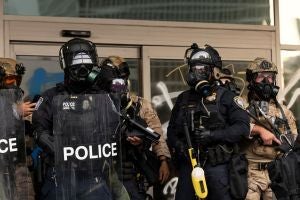
In most cases within the states, murder and manslaughter will be charged at the state level. Still, if the victim is a U.S. officer or federal government employee engaged in their duties, the federal government takes precedence.
Title 18, Section 1114 of the U.S. Code establishes severe penalties for killing or attempting to kill an officer or employee of the United States, and this statute provides the federal government with broad authority to prosecute these offenses, regardless of where they occur.
The safety of individuals serving the United States government is of utmost importance. Section 1114 is essential in this regard, serving as a key element in the legal system that protects federal officers and employees from violence and threats.
If you're accused of murdering a federal officer or employee, you could be facing life imprisonment in federal custody or possibly the death penalty. This underscores the serious consequences of such actions, serving as a powerful deterrent.
Key Takeaways
- This federal law offers legal safeguards for federal officers and employees by making acts of violence or attempts to harm them during the execution of their official duties a criminal offense.
- 18 U.S.C. 1114 not only details specific protections but also imposes strict penalties for violations. This demonstrates the government's dedication to safeguarding its employees and enabling them to perform their duties without fear of harm. The law's broader implications also shape the wider legal environment regarding federal employee safety.
- Federal officers and employees frequently encounter hazardous and unpredictable situations. Whether performing law enforcement, regulatory tasks, or other official duties, the threat of violence remains a significant concern.
- This law is part of a comprehensive strategy to protect federal interests and uphold the integrity of government operations. It corresponds with other laws that focus on the safety and security of federal employees, providing a comprehensive approach to safeguard those who serve the nation.
- By making acts of violence against these individuals illegal, 18 U.S.C. 1114 serves as a powerful deterrent, reassuring federal employees that their safety is a top priority.
- For legal professionals, comprehending the scope and consequences of this law is essential. It influences not only individuals potentially charged under this statute but also shapes the wider legal environment regarding federal employee safety.
What Does 18 U.S.C. 1114 Say?
18 U.S. Code § 1114 - Protection of officers and employees of the United States says -

(a) In General, Whoever kills or attempts to kill any officer or employee of the United States or of any agency in any branch of the United States Government (including any member of the uniformed services) while such officer or employee is engaged in or on account of the performance of official duties, or any person assisting such an officer or employee in the performance of such duties or on account of that assistance, shall be punished-
(1) in the case of murder, as provided under section 1111.
(2) in the case of manslaughter, as provided under section 1112; or
(3) in the case of attempted murder or manslaughter, as provided in section 1113.
(b) Extraterritorial Jurisdiction.-
There is extraterritorial jurisdiction over the conduct prohibited by this section.
Who Is Protected Under This Federal Law?
This law aims to protect a wide group of people, especially those essential to the federal government's operations. But who exactly are these individuals, and what actions break this law?
The statute primarily protects federal officers and employees-individuals employed by any U.S. government department or agency. It guarantees that those performing official duties can do so safely, without fear of violence or threats.

This protection is especially crucial for federal law enforcement personnel, who frequently encounter hazardous situations during their work. In addition to federal employees, the statute also applies to certain individuals performing official duties on behalf of the government.
This includes contractors and non-governmental personnel assigned critical responsibilities essential to federal operations.
Including these individuals guarantees broad protection for everyone contributing to the federal government's functioning, ensuring a comprehensive approach to safeguarding those who serve the nation.
Regarding prohibited actions, 18 U.S.C. § 1114 makes it a crime to attempt or actually harm protected individuals while they are performing or on account of their official duties. This encompasses not only direct physical violence but also threats and efforts to intimidate or coerce. The law's broad scope demonstrates the federal government's serious commitment to protecting its personnel against any threats.
Extraterritorial Jurisdiction Under 18 U.S.C. 1114
A key component of 18 U.S.C. 1114 is its grant of extraterritorial jurisdiction. This means the federal government can prosecute an individual for killing or attempting to kill a federal officer or employee wherever the alleged act occurs--even if it occurs outside the borders of the United States.
This provision underscores the federal interest in protecting its personnel while they are performing official duties, whether at home or abroad.

The law applies to anyone who kills or attempts to kill any officer or employee of the United States or any branch of its government, including members of the uniformed services.
It also extends protection to any person assisting a federal officer or employee in the performance of their duties.
The implication for a defendant is significant. If you are accused of killing or attempting to kill a federal officer, federal law takes precedence over state laws.
This often means you will face prosecution in a federal court, rather than a state court - and this typically involves more severe penalties and sentencing guidelines than those at the state level.
The federal government has vast resources for investigation and prosecution, making these charges particularly serious--and a conviction far more likely than if you were prosecuted in state court.
The Role of the Sentencing Guidelines
Sentencing in federal cases follows the United States Sentencing Guidelines, which outline a framework for establishing suitable penalties. These guidelines take into account multiple factors, including:
- The severity of the crime,
- The defendant's criminal record, and
- Any mitigating or aggravating circumstances.
For example, a crime that causes serious bodily injury would typically result in a harsher sentence than a less serious offense. Understanding these guidelines is crucial for anyone charged under 18 U.S.C. § 1114.
Although they encourage uniform sentencing, they also allow judges to account for specific case details. In these cases, the role of a skilled federal criminal defense attorney is especially vital.
Penalties for Harming Federal Officers
18 U.S.C. 1114 does not contain its own sentencing structure. Instead, it directs the court to the punishment provisions for murder, manslaughter, and their attempts as defined in other sections of the U.S. Code:
Murder (18 U.S.C. 1111): Murder is defined as the unlawful killing of a human being with malice aforethought. The penalties include:
- First-degree murder is a premeditated killing or one that occurs during the commission of another serious felony. The penalty is death or life imprisonment.
- Second-degree murder includes any other murder with malice aforethought. The penalty is imprisonment for any term of years or for life.
Manslaughter (18 U.S.C. 1112): Manslaughter is the unlawful killing of a human being without malice. The penalties include:
- Voluntary manslaughter occurs in a sudden quarrel or in the heat of passion. It is punishable by a fine and/or imprisonment for up to 15 years.
- Involuntary manslaughter occurs during the commission of an unlawful act not amounting to a felony or a lawful act performed without due caution. It is punishable by a fine and/or imprisonment for up to 8 years.
Attempted Murder or Manslaughter (18 U.S.C. 1113): Attempting to commit these crimes also carries substantial penalties:
- Attempted murder is punishable by a fine and/or imprisonment for up to 20 years.
- Attempted manslaughter is punishable by a fine and/or imprisonment for up to 7 years.
What are Related Federal Laws
18 U.S. Code Chapter 51 Part I, Homicide, has several related federal laws, including the following:
- 18 U.S.C. 1111. Murder
- 18 U.S.C. 1112. Manslaughter
- 18 U.S.C. 1113. Attempt to commit murder or manslaughter
- 18 U.S.C. 1114. Protection of officers and employees of the United States
- 18 U.S.C. 1115. Misconduct or neglect of ship officers
- 18 U.S.C. 1116. Murder or manslaughter of foreign officials, official guests, or internationally protected persons
- 18 U.S.C. 1117. Conspiracy to murder
- 18 U.S.C. 1118. Murder by a Federal prisoner
- 18 U.S.C. 1119. Foreign murder of United States nationals
- 18 U.S.C. 1120. Murder by escaped prisoners
- 18 U.S.C. 1121. Killing persons aiding Federal investigations or State correctional officers
- 18 U.S.C. 1122. Protection against the human immunodeficiency virus
Common Defenses to Charges Under 18 U.S.C. § 1114
When facing charges under this statute, a federal criminal defense attorney will thoroughly scrutinize every element of the government's case to identify weaknesses and build an effective defense. Common strategies may include:
- Self-Defense: A defendant may argue that their actions were necessary to protect themselves from imminent harm or death. This defense requires showing that the defendant reasonably believed they were in immediate danger and used a proportional amount of force.
- Lack of Intent: For a murder conviction, the prosecution must prove malice aforethought or premeditation. A defense attorney may argue that the killing was accidental, unintentional, or lacked the required level of criminal intent. This could result in a lesser charge, such as manslaughter, or, in some cases, a full acquittal.
- Victim Was Not a Federal Officer or on Duty: The statute specifically protects federal officers and employees engaged in or on account of their official duties. A defense could be built around the argument that the victim did not meet the definition of a federal officer under the law or that the incident was unrelated to their official duties. The purpose of this defense is primarily to argue that the crime does not fall under federal jurisdiction and should be tried in state courts instead (which provides more room for negotiation of lesser penalties and better chances of acquittal).
For additional information, contact our federal criminal defense law firm, Eisner Gorin LLP, located in Los Angeles, California.
Related Content: