
South Dakota Federal Criminal Defense Attorney
When you are charged with a federal crime in South Dakota, your case will likely be heard in the U.S. District Court for the District of South Dakota. Federal criminal cases present unique challenges that differ significantly from crimes tried at the state level.
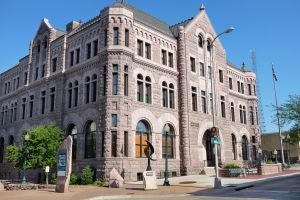
When you are accused of breaking a federal law, you can be prosecuted at the federal level and end up in a federal courtroom.
Our defense attorneys, with our extensive experience and proven track record, help clients defend against even the most serious charges, providing you with the reassurance and confidence you need during this challenging time.
Crimes against federal agencies, such as the Securities and Exchange Commission (securities fraud), the U.S. Treasury (counterfeiting), the Environmental Protection Agency (toxic waste dumping), the Bureau of Alcohol, Tobacco, and Firearms (weapons crimes), and the Drug Enforcement Agency (drug smuggling), are all federal crimes.
Federal prosecutors are often better resourced, investigations are lengthier and more complex, and sentencing guidelines can result in harsher penalties.
Convictions in federal cases can lead to severe consequences, including long prison terms, steep fines, and lasting damage to your personal and professional life. For these reasons, it's crucial to have a federal criminal defense lawyer with experience practicing in the District of South Dakota.
Common Types of Federal Criminal Cases
Federal prosecutors in South Dakota most frequently handle cases that involve:
- Drug trafficking involving interstate drug transportation and large-scale distribution operations involving methamphetamine and fentanyl
- Drug conspiracies involving opioids or cocaine
- Sex crimes involving the internet to lure minors, human trafficking, child porn possession, and exploitation of minors
- Firearms violations (e.g., felon in possession, gun trafficking)
- Violent crimes, including kidnapping, murder, and offenses related to organized crime groups and gang violence
- White-collar crimes involving tax evasion, mail fraud, wire fraud, securities fraud, and embezzlement cases
- Ponzi schemes, which can cause substantial financial damage, as well as money laundering and counterfeiting
- Healthcare fraud, including Medicare and Medicaid fraud
- Cybercrime and identity theft
- Immigration-related offenses
- Environmental crimes
- RICO, including allegations under 18 U.S.C. 1961
- Obstruction of justice under 18 U.S.C. 1512
Why Federal Criminal Cases Are More Challenging
Facing charges in federal court is a very different experience from dealing with a state-level prosecution. Federal proceedings are highly structured, complex, and unforgiving, and defendants often underestimate the challenges until it is too late. Here are some critical differences to be aware of:
- Federal Rules of Criminal Procedure: Every stage of the case-from indictment to trial, is governed by uniform federal rules that leave little room for error.
- Pre-Trial Processes: Federal cases involve extensive pre-trial motions, hearings, and discovery obligations that can overwhelm defendants without skilled counsel.
- Sentencing Guidelines: Federal judges follow detailed sentencing guidelines. While they may exercise some discretion, these guidelines often result in longer prison terms and limited opportunities for leniency.
- Powerful Prosecutors and Investigators: Federal prosecutors frequently work in tandem with agencies such as the FBI, DEA, ATF, ICE, and Homeland Security. Many cases are built over months or years of investigation, giving the government a substantial advantage.
- High Risk of Conviction: Because federal prosecutors rarely bring cases unless they are confident in their evidence, the conviction rate in federal court is significantly higher than in state proceedings.
- Grand Jury Indictments: Most federal criminal cases begin with an indictment by a grand jury, not a simple charging document like in state court.
- Extensive Pre-Trial Litigation: Federal cases often involve motion practice around evidence suppression, discovery disputes, and other legal challenges that require a seasoned legal strategy.
- Discovery Complexity: Federal cases often include vast volumes of digital evidence, surveillance footage, wiretaps, and financial records, all of which must be reviewed and challenged as necessary.
- Plea Bargaining Pressure: Because federal prosecutors often wait until they have a strong case to file charges, conviction rates are much higher in federal court. Plea agreements are more common, and trials are less frequent-but the stakes are much higher when they do occur.
These factors underscore why federal criminal cases carry higher stakes and demand a defense lawyer who knows the federal system inside and out.
Overview of the District of South Dakota
The U.S. District Court for the District of South Dakota is the federal trial court with jurisdiction over all federal criminal and civil cases arising within the state. Unlike state courts, which handle violations of state law, this court deals with criminal charges at the federal level--even if committed in the state of South Dakota.
Major cities served by the U.S. District Court for the District of South Dakota include Sioux Falls, Rapid City, and Aberdeen. Key facts to know about the District of South Dakota:
- Jurisdiction: Handles federal criminal matters, including violations of federal statutes, crimes committed on federal or native lands, and crimes involving interstate commerce or crossing state or national boundaries.
- Judges: The District is staffed by six active U.S. District Judges, supported by three magistrate judges who oversee preliminary proceedings, misdemeanor matters, and discovery disputes.
- Caseload: Due to South Dakota's geography and demographics, a large portion of the criminal docket involves crimes occurring in Indian Country, along with federal drug and firearms prosecutions.
Court Locations
Sioux Falls (District Headquarters)
Federal Building and United States Courthouse, 400 S Phillips Ave, Sioux Falls, SD 57104
Rapid City
United States Courthouse, 515 Ninth Street, Rapid City, SD 57701
Pierre
United States Courthouse, 225 South Pierre Street, Pierre, SD 57501
Aberdeen
United States Marshals Service, 102 Fourth Avenue S.E., Room 409, Aberdeen, SD 57401
Advantages of Hiring a Federal Criminal Defense Attorney
Given the complexity and severity of federal cases, hiring an attorney with specific experience in the U.S. District Court for the District of South Dakota can significantly impact the outcome of your case. Some of the key advantages include:
- Local Court Experience: Our attorneys, intimately familiar with the District of South Dakota, know the judges, prosecutors, and court staff. This deep understanding of the local court system helps in tailoring effective defense strategies, making you feel understood and supported throughout the legal process.
- Experience dealing with federal agencies: Whether the case involves an FBI investigation, a DEA drug case, or a Homeland Security cybercrime charge, a seasoned federal lawyer knows how to engage with those agencies and counter their methods.
- Knowledge of Federal Procedure: An experienced federal defense lawyer ensures compliance with strict procedural rules, preventing mistakes that could harm your defense.
- Strategic Defense Planning: Our federal defense attorneys are adept at challenging evidence, questioning investigative methods, and exploiting weaknesses in the prosecution's case. This strategic defense planning ensures that you are well-prepared for the legal battle, providing you with a sense of security during this challenging time.
- Sentencing Advocacy: If a conviction occurs, an attorney can argue for mitigating factors and alternatives to incarceration within the federal sentencing framework.
- Access to Resources: Complex federal cases often require expert witnesses, investigators, and forensic specialists. A seasoned defense lawyer can effectively coordinate these resources.
- Negotiation Skills: Since a majority of federal criminal cases are settled out of court via plea agreements, strong negotiation skills are essential to ensure a fair resolution. A skilled federal criminal defense attorney will have experience negotiating with prosecutors for reduced charges, favorable plea deals, or diversionary outcomes.
For more information, contact our federal criminal defense law firm, based in Los Angeles, CA.
Related Content: