
Federal Grand Jury Representation Lawyer: Navigating Investigations by FBI, DEA, IRS, and DHS
Receiving a federal grand jury subpoena or being contacted by federal agents (such as the FBI, DEA, IRS, or Homeland Security) is an incredibly serious turning point in a federal criminal investigation.
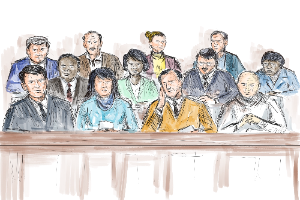
Because federal law enforcement agencies spend months or even years quietly building cases before presenting evidence to a grand jury, your immediate response often dictates whether or not you will face a formal indictment.
Navigating this complex phase requires a deep understanding of federal criminal procedure.
Whether you are classified as a witness, a subject, or a target, securing an experienced federal criminal defense lawyer immediately is your strongest line of defense to avoid devastating federal charges.
Quick Reference Summary: The Federal Grand Jury Process
|
Legal Element & Structure |
Operational Rules & Statutory Authority |
| Grand Jury Composition | Composed of 16 to 23 citizens empaneled by a federal district court judge. |
| Quorum Requirements | At least 16 members must be physically present to conduct business and hear evidence. |
| Voting Threshold | A minimum of 12 grand jurors must vote in favor of a "True Bill" to issue an indictment. |
| Secrecy Mandate | Strict secrecy is enforced under Federal Rule of Criminal Procedure 6(e). |
| Subpoena Types | Subpoena ad testificandum (compels oral testimony) or Subpoena duces tecum (compels production of physical documents/records). |
| Legal Counsel Status | Attorneys are strictly barred from entering the grand jury room during testimony. |
| Target Status Risk | If designated a "target," a federal indictment is typically imminent unless legal intervention occurs. |
What the Prosecution Must Prove to Secure an Indictment
Unlike a criminal trial where guilt must be proven beyond a reasonable doubt, the standard of proof required in a federal grand jury room is significantly lower.
To secure an indictment, the Assistant United States Attorney (AUSA) must present enough evidence to convince at least 12 grand jurors that there is probable cause to believe:
-
A specific federal crime was committed.
-
The individual or corporate entity named in the indictment committed that crime.
Because the defense is not allowed to present cross-examination, call witnesses, or introduce exculpatory evidence, federal grand juries routinely return indictments at the prosecutor's request.
This reality makes early, aggressive legal intervention outside the grand jury room essential.
Real-World Example of a Grand Jury Subpoena Scenario
The "Corporate Accountant" Dilemma: A financial controller at a medical logistics company receives a federal subpoena duces tecum from an AUSA directing them to produce corporate financial ledgers and to appear to testify. The subpoena stems from a secret Department of Health and Human Services (HHS) and FBI healthcare fraud investigation into the company's billing practices.
If the accountant enters the grand jury room completely unrepresented, they risk inadvertently providing self-incriminating answers or making minor factual contradictions that prosecutors can twist into obstruction-of-justice or perjury charges. However, by hiring a federal defense lawyer early, the defense can interface directly with the AUSA, clearly establish the accountant's legal status as a non-target witness, negotiate a strictly limited scope of discovery, and prepare to invoke their constitutional protections safely outside the jury room.
Strategic Roles: Witness, Subject, or Target
Federal prosecutors explicitly categorize individuals involved in a grand jury probe into one of three distinct categories. Understanding your designated status dictates your defense strategy:
-
Witness: You possess information or documentation that is relevant to the federal investigation, but prosecutors do not currently believe you have criminal exposure. Warning: Your status as a witness can change to a subject or target at any point based on your testimony.
-
Subject: Your conduct falls directly within the scope of the grand jury's investigation. There is suspicious or look-alike behavior, but the government has not yet finalized its decision to charge you.
-
Target: The prosecution firmly believes they possess substantial, cohesive evidence linking you to a federal crime. If you are a target, a formal indictment is imminent.
Frequently Asked Questions
Can I refuse to comply with or testify before a federal grand jury?
You cannot simply ignore a federal subpoena without facing immediate federal contempt of court charges under 18 U.S.C. § 401.
However, you can legally refuse to answer specific, individual questions during your testimony by invoking your Fifth Amendment privilege against self-incrimination if a truthful answer could expose you to criminal liability.
Why can't my criminal defense attorney sit next to me inside the grand jury room?
Under long-standing federal procedural rules, defense counsel is strictly barred from entering the grand jury room while the grand jury is in session.
However, you retain the absolute right to step outside the room after each question to consult extensively with your attorney before providing an answer.
What are the real consequences of lying to a federal grand jury?
Making a false statement under oath or intentionally omitting material facts during grand jury testimony triggers severe felony charges for perjury under 18 U.S.C. § 1621 or making false declarations under 18 U.S.C. § 1623.
These separate felony charges carry up to 5 years in federal prison per violation, completely independent of the underlying case.
Can a corporate entity protect its records by invoking the Fifth Amendment?
No. Under the collective entity doctrine established by the U.S. Supreme Court, corporations, LLCs, and partnerships do not possess a Fifth Amendment privilege against self-incrimination.
A business must designate a custodian of records to produce the subpoenaed corporate files, though that custodian retains personal protection against self-incriminating oral testimony.
How often do federal grand juries actually refuse to return an indictment?
It is exceptionally rare for a grand jury to reject a prosecutor's request for an indictment.
Because the prosecutor controls the narrative, selects the evidence, and operates in total secrecy without judicial or defense oversight, the grand jury primarily serves to validate the prosecutor's case.
Can my defense attorney challenge or quash a federal grand jury subpoena?
Yes, though the legal bar is extremely high. An attorney can file a formal motion to quash or modify a subpoena under Federal Rule of Criminal Procedure 17(c) if they can definitively prove that compliance would be completely unreasonable, oppressive, or overbroad, or if it explicitly violates established attorney-client privilege.
What is a federal grand jury proffer agreement and should I sign one?
A proffer agreement—often called a "queen for a day" agreement—is a written contract between you and the federal prosecutor.
It allows you to provide information about a crime with the assurance that the government will not use your statements directly against you in a later criminal trial.
You should never participate in a proffer session without a lawyer first negotiating strict, explicit immunity limits.
What is the difference between statutory immunity and act of production immunity?
Statutory immunity (18 U.S.C. § 6002) completely protects a witness from having their oral grand jury testimony used against them in a criminal prosecution.
In contrast, "act of production" immunity is narrower; it protects a person only when the very act of handing over subpoenaed physical documents would inherently reveal incriminating details, such as the existence of hidden bank accounts.
Can federal prosecutors call me back to testify multiple times?
Yes. There is no law preventing a federal prosecutor from issuing multiple subpoenas requiring you to return to the grand jury room over its 18-month term.
This creates tremendous legal risk because minor contradictions, memory lapses, or discrepancies between your first and second appearances can easily be weaponized by an AUSA to threaten you with perjury or obstruction charges.
Can a grand jury subpoena target my personal cell phone, texts, or emails?
Yes. A subpoena duces tecum can legally compel you to hand over personal cell phones, encrypted messages, emails, and hard drives.
However, a federal defense attorney can frequently challenge these requests under the Fourth and Fifth Amendments, arguing that the government's demands are overbroad "fishing expeditions" or that forcing you to provide a passcode violates your constitutional protections.
Related Federal Laws and Criminal Statutes
-
18 U.S.C. § 401 (Contempt of Court): Authorizes federal courts to impose immediate fines, coercive detention, or imprisonment for individuals who refuse to comply with grand jury subpoenas or lawful judicial orders.
-
18 U.S.C. § 1621 & § 1623 (Perjury / False Declarations): Outlines severe federal felony penalties for knowingly making false statements or material misrepresentations under oath before a grand jury.
-
18 U.S.C. § 1503 (Obstruction of Justice): Penalizes any corrupt effort to influence, obstruct, or impede the due administration of justice, including destroying records subpoenaed by a grand jury.
-
Federal Rule of Criminal Procedure 6: The foundational federal rule governing the grand jury's size, recording requirements, strict secrecy provisions, and the absolute exclusion of defense counsel from inside the room.
Immediate Intervention: Speak with a Federal Criminal Defense Lawyer
If you have been contacted by federal agents, learned that you are the subject of an ongoing probe, or received a grand jury subpoena, waiting until you are formally indicted is a dangerous mistake.
Once an indictment is handed down, the federal government's conviction rate skyrockets, and your legal leverage drops drastically.
Early intervention by an experienced federal grand jury defense attorney allows your legal counsel to communicate directly with the Assistant United States Attorney, clarify your status, negotiate formal immunity agreements, structure proffer sessions, and carefully limit the scope of the investigation.
The defense attorneys at Eisner Gorin LLP, based in Los Angeles, specialize in aggressively navigating high-stakes federal investigations nationwide. Contact our firm at (818) 781-1570 to secure a confidential legal consultation and protect your future before charges are filed.