
Misbranding or Mislabeling Fraud under the FDCA
The Federal Food, Drug, and Cosmetic Act (FDCA) serves as the primary regulatory framework ensuring the safety and integrity of products consumed or used by the American public.
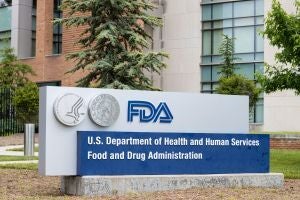
Administered by the Food and Drug Administration (FDA), this act governs a wide range of products, including foods, drugs, medical devices, and cosmetics.
While the FDCA's central purpose is public health protection, its enforcement mechanisms are rigorous.
At worst, violations of this law can lead to federal criminal charges with severe consequences. One of the most common grounds for prosecution under the FDCA is misbranding or mislabeling fraud.
These are not merely regulatory oversights; they are federal offenses that can result in significant fines, asset forfeiture, and incarceration.
If you are accused of criminal violations of the FDCA through misbranding or mislabeling, your best hope of a favorable outcome is with the help of an experienced federal criminal defense attorney.
Key Takeaways
- Misbranding is a federal offense involving the failure to comply with statutory requirements for reporting essential product information like the name, manufacturer, or distributor.
- A product is considered misbranded if its label provides false or misleading information regarding its quality or branding.
- The FDCA is the federal law that imposes penalties on those who sell misbranded products across state lines.
- The Food and Drug Administration (FDA) enforces the FDCA.
- The FDA has the power to initiate civil enforcement actions against entities suspected of misbranding, which can include issuing warning letters, implementing recalls, imposing debarments, seizures, injunctions, and civil penalties.
- Serious misbranding charges could lead to a criminal investigation, potentially resulting in criminal penalties and imprisonment.
- Consider hiring an attorney experienced in handling the various provisions of the FDCA and FDA civil and criminal enforcement actions.
Misbranding or Mislabeling Defined
Misbranding, also called mislabeling, refers to products that do not meet specific federal standards.
For example, common misbranding accusations involve products with labels that lack essential details, such as the name, manufacturer, or distributor.
A product is considered misbranded if the label, brand, or notice under which it is sold is false or misleading regarding its quality or branding and violates legal requirements.
The government actively pursues and prosecutes it as a federal offense because of its potentially dangerous impact on consumers.
What Constitutes Misbranding or Mislabeling Fraud?
At its core, misbranding occurs when a product's labeling is false or misleading. The FDCA requires that labels on regulated products be truthful, accurate, and informative.
Fraud in this context implies that a manufacturer or distributor has introduced products into commerce that fail to meet these strict statutory standards, often with the intent to deceive consumers or regulators.
The legal definition of misbranding is broad. It encompasses affirmative lies-such as claiming a drug cures a disease when it does not, as well as omissions, such as failing to list ingredients or required warnings.
Federal charges for misbranding are typically filed under specific sections of Title 21 of the United States Code:
- 21 U.S.C. § 331: This statute explicitly prohibits the introduction, delivery for introduction, or receipt in interstate commerce of any food, drug, device, or cosmetic that is adulterated or misbranded. It is the foundational statute for most FDCA prosecutions.
- 21 U.S.C. § 352: This section provides the detailed criteria for what constitutes a "misbranded" drug or device. Under this statute, a product is misbranded if its labeling is false or misleading, if it lacks the name and place of business of the manufacturer, or if it fails to bear adequate directions for use.
Common scenarios that trigger these charges include mislabeling the quantity of contents, failing to declare major allergens, marketing dietary supplements with unapproved drug claims, or selling prescription devices without proper authorization.
What are Some Examples of Misbranding?
Misbranding can happen in various situations. Besides misbranding, companies may also be liable under other consumer product laws at both the federal and state levels.
Below are a few examples of misbranding violations or breaches of other consumer product and protection laws:
- Knowingly engaging in the trafficking of misbranded products at any stage-manufacturing, distribution, or sales.
- Insufficient or missing warnings on labels, such as instructions for children.
- Reporting unsafe dosages or neglecting to disclose the recommended duration for taking the drug, along with other necessary warnings.
- Producing and marketing fake or deceptive labels designed to mislead consumers.
- Failing to provide sufficient instructions for using certain drugs.
- Selling counterfeit or imitation drugs to consumers.
- Selling a product using the name of a different drug.
- Omitting some active ingredients of a drug or details like the manufacturer's name.
- Making a health claim on the label that is false or not backed by evidence.
- Refusing a federal authority's request to inspect a company's premises related to allegations of misbranding or record-keeping failures.
Penalties for Misbranding/Mislabeling
The consequences of a conviction under the FDCA are substantial. The government treats these violations seriously because they directly impact consumer safety.
Criminal Penalties
Under 21 U.S.C. § 333, penalties depend heavily on the defendant's intent and history.
- Misdemeanors: A first-time violation where there is no proof of intent to defraud or mislead is typically charged as a misdemeanor. This can result in imprisonment for up to one year and a fine of up to $1,000 (or higher under alternative sentencing statutes).
- Felonies: If the government can prove that the violation was committed with the "intent to defraud or mislead," or if it is a second offense, the charge becomes a felony. Felony convictions carry penalties of up to three years in prison and fines up to $10,000 per violation.
Other Collateral Consequences
Beyond prison time, defendants often face crippling civil penalties. The FDA may seek substantial monetary fines and permanent injunctions preventing the individual or business from operating in the industry.
Furthermore, product recalls can destroy a company's reputation and financial stability overnight.
For executives and professionals, a conviction often results in debarment, meaning they are legally prohibited from working in the pharmaceutical or food industries.
Common Defenses to FDCA-Related Crimes
While the FDCA grants the government broad power to enforce the rules, if you've been charged with a crime related to a violation, you still have rights and legal avenues to challenge these accusations.
A skilled federal criminal defense attorney with experience in FDCA-related offenses will implement several defense strategies to combat the charges. Common defenses include, but are not limited to:
- Lack of Intent: For felony charges, the prosecution must prove "intent to defraud or mislead" beyond a reasonable doubt. If the misbranding was the result of a clerical error, a good-faith mistake, or negligence rather than a calculated scheme to deceive, the defense may argue that the necessary criminal intent is absent. This can sometimes reduce potential felony exposure to a misdemeanor.
- Compliance with Regulatory Standards: Federal labeling regulations are incredibly dense and subject to interpretation. A defense team may argue that the labeling in question actually complied with FDA guidelines at the time of distribution, or that the regulations were too vague to provide fair notice of what was required.
- Insufficient Evidence of Interstate Commerce: Federal jurisdiction under the FDCA relies on the product moving through interstate commerce. If the prosecution cannot definitively prove that the misbranded product crossed state lines, they may fail to meet the jurisdictional requirements for a federal crime.
- Reliance on Expert Advice: In complex regulatory environments, business owners often rely on consultants, regulatory affairs experts, or legal counsel. A defense of "good faith reliance" may be viable if the defendant can show they sought and followed professional advice, believing their conduct was in full compliance with the law.
For a case evaluation or additional information, contact our federal defense attorneys at Eisner Gorin LLP.