
Federal law prohibits the unauthorized distribution of anabolic steroids under 21 U.S.C. § 841, and 21 U.S.C. § 802(41) defines which substances qualify as anabolic steroids.
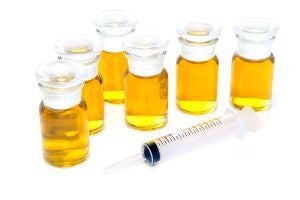
Online PED stores, wellness clinics, compounding operations, and their owners can also face federal prosecution involving human growth hormone (HGH) or selective androgen receptor modulators (SARMs). However, federal statutes govern those substances differently.
The distinction is important. Anabolic steroids are Schedule III controlled substances. HGH has its own federal distribution prohibition under 21 U.S.C. § 333(e).
SARMs sold for human use may violate the Federal Food, Drug, and Cosmetic Act even though SARMs as a category are not automatically controlled substances under the Controlled Substances Act. A federal PED investigation can also expose business revenue and property to forfeiture.
What Qualifies as an Anabolic Steroid Under Federal Law?
The Controlled Substances Act provides a detailed definition of an anabolic steroid. The statute generally covers drugs or hormonal substances chemically and pharmacologically related to testosterone, while excluding estrogens, progestins, corticosteroids, and dehydroepiandrosterone.
The statute specifically identifies numerous substances, including:
- Testosterone
- Boldenone
- Drostanolone
- Methandienone
- Oxandrolone
- Oxymetholone
- Stanozolol
- Trenbolone
There are also various other compounds covered under the law; it allows a substance that is not expressly listed to qualify as an anabolic steroid when the statutory requirements are satisfied.
Anabolic steroids are placed in Schedule III of the Controlled Substances Act. That classification makes unauthorized manufacture, distribution, dispensing, or possession with intent to distribute subject to federal prosecution under § 841. This places commercial steroid distribution within the same general federal framework used for other federal drug crimes.
What Must Federal Prosecutors Prove Under 21 U.S.C. § 841?
For a steroid distribution charge under § 841(a)(1), prosecutors must establish beyond a reasonable doubt that the defendant knowingly or intentionally: manufactured, distributed, dispensed, or possessed with intent to manufacture, distribute, or dispense a controlled substance.
In an anabolic steroid prosecution, the disputed issues may include:
- Whether the substance was actually an anabolic steroid covered by federal law
- Whether the defendant knowingly or intentionally distributed or possessed the substance with intent to distribute it
- Whether the conduct was authorized under federal law
- Whether evidence establishes the defendant's responsibility for the particular transactions charged
- Whether quantities attributed to the defendant are supported by reliable evidence
These questions can become complicated when a business sells hundreds of supplements, peptides, hormones, or wellness products and only certain products are alleged to contain controlled substances.
Website ownership or a management position does not, by itself, establish who selected a product, knew its chemical composition, approved its sale, or participated in a particular shipment.
Is HGH Distribution Prosecuted Under the Same Steroid Law?
No. HGH should not be treated as an anabolic steroid for purposes of § 841 merely because it is marketed or used as a performance-enhancing drug. Federal law addresses HGH distribution specifically in 21 U.S.C. § 333(e).
That provision prohibits knowingly distributing or possessing with intent to distribute human growth hormone for human use other than treatment of a disease or other recognized medical condition when that use has been authorized by the Secretary of Health and Human Services and ordered by a physician.
Put simply, prescribing or selling HGH for bodybuilding, athletic enhancement, or anti-aging purposes can create a different federal criminal issue from distributing anabolic steroids.
A violation of § 333(e)(1) carries up to five years in prison. If the offense involves a person under 18, the maximum increases to 10 years. The statute defines HGH as Somatrem, somatropin, or an analog of either substance.
Having a physician associated with a clinic does not make every HGH distribution lawful. The medical purpose for which the HGH was distributed, and whether that use satisfies the statutory requirements, can become a central issue.
Can Selling SARMs Result in Federal Charges?
Yes, but a SARM case requires a different statutory analysis. Selective androgen receptor modulators are not always categorized as Schedule III anabolic steroids simply because they are sold for muscle growth or performance enhancement.
The FDA has treated products containing SARMs such as Ostarine and RAD-140 that are marketed for human use as unapproved new drugs. Federal authorities may pursue conduct involving the introduction of unapproved drugs into interstate commerce under the Federal Food, Drug, and Cosmetic Act.
Some SARMs are sold legitimately as research chemicals for laboratory use rather than for consumption by people.
Federal scrutiny can arise when an online seller labels a SARM “research use only” or “not for human consumption,” but its advertising, dosage information, customer communications, or other evidence indicates that the product is actually being marketed for bodybuilding or performance enhancement.
How Can Wellness Clinics Become Targets of PED Investigations?
A wellness clinic can draw federal scrutiny when its business model combines:
- Prescriptions,
- Direct product sales,
- Online consultations,
- Recurring shipments, or
- Performance-enhancement programs.
Investigators may examine whether physicians conducted legitimate medical evaluations, what diagnoses appear in patient records, why particular drugs were prescribed, how products were obtained, and whether the clinic's marketing conflicts with its medical records.
A clinic offering HGH for “anti-aging,” for example, presents a different legal question from a physician treating an FDA-recognized medical condition.
Similarly, investigators examining steroid prescriptions may compare patient charts against ordering records, prescription volume, communications between employees and patients, and payments to suppliers.
These investigations can overlap with broader allegations of federal drug crimes when authorities believe a clinic was operating as a commercial source of controlled substances rather than providing authorized treatment.
What Defense Strategies Apply to Federal PED Distribution Charges?
The right strategy depends heavily on the charged substance and the applicable federal statute. Treating steroids, HGH, and SARMs as interchangeable can obscure significant weaknesses in a federal case.
Potential defense issues include:
- Challenging whether chemical testing establishes that a seized product contains the substance alleged
- Disputing whether an alleged steroid satisfies the statutory definition in § 802(41)
- Contesting evidence that a business owner or employee knew what a mislabeled or imported product actually contained
- Establishing lawful authorization for controlled-substance transactions when supported by medical and prescription records
- Challenging whether HGH was distributed for a use prohibited by § 333(e)
- Examining whether marketing and other evidence actually establish the intended human use alleged for a SARM product
- Disputing drug quantities or sales attributed to an individual defendant
- Challenging claims that an owner or executive personally participated in transactions carried out by other employees
A large commercial operation also creates attribution questions. Payroll records, corporate titles, and access to a company bank account can show association with a business, but the relevant evidence may tell a different story about who sourced products, controlled website descriptions, communicated with suppliers, approved prescriptions, or directed shipments.
Related Federal PED & Drug Distribution Defense Laws
Understanding the specific federal statutes governing performance-enhancing drug (PED) investigations is essential, as prosecutors often stack controlled substance charges, FDA violations, and financial crime statutes to increase leverage and potential prison sentences.
-
Controlled Substances Act - Schedule III Steroids (21 U.S.C. § 841(a)(1)): Prohibits the unauthorized manufacture, distribution, dispensing, or possession with intent to distribute Schedule III anabolic steroids, carrying penalties of up to 10 years in federal prison per count.
-
Statutory Definition of Anabolic Steroids (21 U.S.C. § 802(41)): Defines the specific chemical compounds, hormonal substances, and testosterone analogs that legally qualify as Schedule III controlled anabolic steroids under federal law.
-
Offenses Involving Human Growth Hormone (21 U.S.C. § 333(e)): Makes it a federal felony to knowingly distribute or possess with intent to distribute Human Growth Hormone (HGH) for human use other than treating a disease or recognized medical condition authorized by the HHS Secretary and prescribed by a physician, carrying up to 5 years in prison (or up to 10 years if distributed to a minor).
-
Federal Food, Drug, and Cosmetic Act - Unapproved New Drugs (21 U.S.C. § 331 & § 355): Criminalizes introducing unapproved new drugs, misbranded pharmaceuticals, or SARMs (Selective Androgen Receptor Modulators) marketed for human consumption into interstate commerce.
-
Federal Asset Forfeiture Statutes (21 U.S.C. § 853): Authorizes the federal government to seize and forfeit any property, real estate, business revenue, or bank accounts derived from or used to facilitate illegal drug or PED distribution.
-
Interstate Mail Fraud & Wire Fraud (18 U.S.C. § 1341 & § 1343): Penalizes using online storefronts, electronic payment processors, wire transfers, or commercial mail carriers to operate an alleged illegal online pharmacy or PED distribution network, carrying up to 20 years in prison per count.
Hypothetical Case Study: Nationwide PED Clinic Accused of Steroid and HGH Distribution
Suppose a nationwide telehealth company sells testosterone-based products and HGH through a membership program.
Prosecutors allege that the company generated $9 million from unlawful PED sales. They charge its owner with steroid distribution under § 841 and unlawful HGH distribution under § 333(e), while seeking forfeiture of several million dollars.
The evidence appears substantial. Prosecutors have thousands of shipments, supplier invoices, patient files, payment records, internal messages, and advertisements promoting muscle development. Several employees have also agreed to cooperate.
Evidence Examination by Eisner Gorin LLP
Our attorneys at Eisner Gorin LLP determine that the evidence supports very different conclusions for the two product lines.
Licensed physicians issued the testosterone prescriptions after laboratory testing, and medical records document diagnoses and treatment protocols for many patients.
The government's initial calculation nevertheless treats virtually every testosterone shipment as illegal steroid distribution. The HGH records present a harder problem.
Certain advertisements expressly promoted body composition and anti-aging benefits, and cooperating employees claim the owner approved the campaign.
Our team identifies a narrower group of HGH transactions associated with those promotions while demonstrating that prosecutors included:
- Substantial revenue from unrelated services,
- Lawful treatments, and
- Non-controlled products in their forfeiture calculation.
Our criminal defense team uses the prescribing records, product-specific sales data, physician testimony, supplier records, and financial accounting to challenge the scope of the steroid count and the amount of allegedly illegal proceeds.
The case resolves without trial. The § 841 steroid distribution charge against the owner is dismissed, the owner enters a plea to a narrower HGH distribution offense, and the forfeiture amount is reduced from the multimillion-dollar figure originally sought to funds traceable to the HGH transactions covered by the plea.
Frequently Asked Questions (FAQs)
Understanding the legal distinction between anabolic steroids, HGH, and SARMs is critical for clinic owners, telehealth companies, and individuals facing federal investigation or criminal charges.
How does federal law distinguish anabolic steroids, HGH, and SARMs?
Anabolic steroids are Schedule III controlled substances prosecuted under 21 U.S.C. § 841, Human Growth Hormone (HGH) is a non-controlled prescription drug regulated under a specific distribution statute (21 U.S.C. § 333(e)), and SARMs are unapproved new drugs regulated primarily by the FDA under the Federal Food, Drug, and Cosmetic Act.
Can a licensed wellness clinic face federal charges for prescribing HGH or testosterone?
Yes, a wellness clinic or telehealth operation can face federal prosecution if investigators determine that prescriptions were issued without a legitimate medical purpose, outside the usual course of professional practice, or for unauthorized uses such as anti-aging, bodybuilding, or athletic enhancement.
How do federal authorities prosecute online SARMs sellers who label products "for research use only"?
Federal prosecutors examine marketing, customer service communications, dosage instructions, and payment methods; if evidence shows that products labeled "for research use only" were intentionally marketed or distributed for human consumption, the "research" label does not shield sellers from FDCA misbranding or unapproved drug charges.
What must prosecutors prove to convict someone of distributing steroids under 21 U.S.C. § 841?
Prosecutors must prove beyond a reasonable doubt that the defendant knowingly or intentionally manufactured, distributed, or possessed with intent to distribute a substance that meets the statutory chemical definition of an anabolic steroid under 21 U.S.C. § 802(41) without legal authorization.
Can a business owner be held criminally liable if an employee sold illegal PEDs without the owner's knowledge?
Business ownership alone does not establish criminal liability; prosecutors must prove that the owner had personal knowledge of the illegal nature of the products, intended to distribute them, or actively participated in the unlawful distribution scheme.
How does the government calculate asset forfeiture in a federal PED investigation?
Federal prosecutors typically seek forfeiture of all gross revenues, bank accounts, equipment, and real property they claim are traceable to allegedly illegal PED transactions, making detailed financial accounting and transaction tracing a vital part of the defense to limit forfeiture strictly to illegal proceeds.
How Can Eisner Gorin LLP Help You?
When a federal PED investigation, DEA search warrant, or grand jury indictment threatens your business, professional licenses, and personal freedom, securing specialized pre-indictment legal defense is critical.
At Eisner Gorin LLP, our federal criminal defense attorneys bring extensive trial experience and technical legal knowledge to fight high-stakes federal charges.
Our firm provides comprehensive pre-indictment representation, litigation, and trial defense tailored to your case:
-
Pre-Indictment Intervention: Intervening directly with Assistant U.S. Attorneys, DEA agents, and FDA-OCI investigators to present exculpatory evidence and prevent formal federal indictments.
-
Grand Jury & Subpoena Response: Managing corporate responses to federal grand jury subpoenas, protecting constitutional privileges, and negotiating witness immunity or target resolution agreements.
-
Regulatory & Chemical Analysis: Partnering with independent forensic toxicologists, medical experts, and former regulatory officials to challenge government testing, chemical definitions, and medical necessity claims.
-
Federal Asset Forfeiture Defense: Conducting forensic accounting to challenge overbroad asset seizures, unfreeze corporate bank accounts, and restrict government forfeiture demands strictly to legitimate statutory scope.
-
Aggressive Courtroom & Trial Defense: Representing clinic owners, pharmacy operators, and online vendors through all stages of federal litigation in United States District Courts nationwide.
Schedule a Confidential Case Review
Protect your business, your reputation, and your freedom. Contact Eisner Gorin LLP today to schedule a confidential consultation with our team of federal criminal defense attorneys.
-
Federal Defense Direct Line: (818) 781-1570
-
Main Legal Portal: Eisner Gorin LLP Federal Defense Lawyers
