
15 U.S.C. § 78u grants the Securities and Exchange Commission (SEC) broad authority to investigate securities law violations, issue subpoenas, pursue civil enforcement actions, and share evidence with the Department of Justice for potential criminal prosecution.
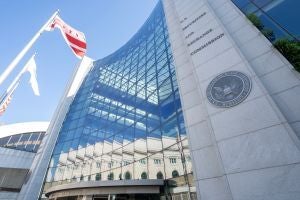
In many securities fraud, insider trading, accounting fraud, market manipulation, and disclosure-related cases, SEC civil proceedings and DOJ criminal prosecutions proceed simultaneously.
Parallel proceedings create risks that do not exist in ordinary criminal cases. Federal prosecutors may later use testimony provided during an SEC investigation.
Documents produced to regulators can become evidence in a criminal case. Statements made in civil filings, settlement negotiations, or sworn examinations may affect decisions regarding indictment, plea negotiations, trial strategy, or sentencing.
The challenge is not merely defending two cases. It is managing two legal fronts that often involve the same facts, witnesses, and evidence. Let's review 15 U.S.C. 78u - Investigations and actions below.
What Are Parallel SEC and DOJ Proceedings?
Parallel proceedings occur when a person or business faces both:
- An SEC investigation or enforcement action
- A DOJ criminal investigation or indictment arising from the same conduct
These cases commonly involve allegations such as:
- Securities fraud under 15 U.S.C. § 78j(b)
- Rule 10b-5 violations
- Insider trading
- Market manipulation
- Wire fraud under 18 U.S.C. § 1343
- Mail fraud under 18 U.S.C. § 1341
- Conspiracy under 18 U.S.C. § 371
In some matters, the SEC acts first, and the criminal case follows. In others, grand jury activity is already underway before the SEC files a civil complaint. Occasionally, both agencies announce actions on the same day.
Why Are Parallel Proceedings Pursued?
Federal prosecutors and regulators frequently pursue parallel investigations because they serve different purposes. The SEC seeks civil remedies such as injunctions, disgorgement, penalties, and officer-and-director bars. The DOJ seeks criminal convictions and criminal penalties.
Federal law expressly permits the SEC to transmit evidence to the Attorney General for criminal proceedings.
Why Are Statements in the SEC Case So Dangerous?
Many individuals underestimate the risks associated with SEC testimony. Unlike a criminal defendant, a target of an SEC investigation may face pressure to provide testimony, submit documents, answer interrogatories, or participate in interviews.
Every statement creates potential exposure. Problems often arise when a person attempts to explain conduct in a civil setting without fully understanding the criminal implications. Prosecutors may compare the SEC testimony against:
- Trading records
- Internal communications
- Corporate documents
- Recorded conversations
- Grand jury testimony
- Statements from cooperating witnesses
Even minor inconsistencies can become significant issues in a criminal prosecution.
For this reason, any response strategy must evaluate how information disclosed in the SEC matter could affect the criminal case. The objective is to avoid creating evidence that prosecutors can later use against the client.
Can a Defendant Invoke the Fifth Amendment During an SEC Investigation?
Yes. Individuals generally retain Fifth Amendment protections against self-incrimination during SEC proceedings.
However, invoking the Fifth Amendment presents strategic considerations. Unlike a criminal trial, civil proceedings sometimes permit adverse inferences from a party's refusal to answer questions.
As a result, the decision to invoke constitutional rights cannot be made in isolation. Attorneys must evaluate:
- The stage of the criminal investigation
- Whether an indictment has already been filed
- The strength of the government's evidence
- The potential impact on the SEC proceeding
- The likelihood of future testimony
A blanket approach rarely works. Effective representation requires careful analysis of the client's position in both matters.
Should the SEC Case Be Stayed While the Criminal Case Proceeds?
Sometimes. A stay temporarily pauses all or part of the civil proceeding. Courts may consider a stay when ongoing civil litigation threatens constitutional rights or interferes with a pending criminal prosecution. Factors in whether a stay will be awarded often include:
- The overlap between the civil and criminal allegations
- The status of the criminal case
- Potential prejudice to either side
- Judicial efficiency
- Public interest considerations
Many courts allow both cases to proceed simultaneously. When that occurs, counsel must carefully manage discovery, testimony, document production, and motion practice to avoid creating unnecessary criminal exposure.
The issue becomes particularly important when prosecutors seek to benefit indirectly from information produced through civil discovery.
How Does Discovery Differ Between SEC and Criminal Cases?
One of the most significant challenges in parallel proceedings involves the different discovery rules.
SEC litigation may provide opportunities for depositions, document requests, interrogatories, and other civil discovery tools. Criminal discovery is generally more limited. This imbalance can create strategic concerns.
Federal prosecutors cannot always obtain certain information through criminal discovery.
Yet that information may become available through the SEC process. As a result, attorneys handling parallel matters must constantly evaluate how civil discovery may affect the criminal defense. Important considerations include:
- Deposition scheduling
- Document production timing
- Privilege assertions
- Protective orders
- Confidentiality issues
- Witness preparation
A coordinated defense strategy seeks to control the flow of information while preserving legal rights in both proceedings.
What Role Do Pretrial Motions Play in Parallel Proceedings?
Motion practice often becomes a central component of parallel-defense litigation. Depending on the facts, attorneys may pursue motions involving:
- Stays of civil proceedings
- Protective orders
- Discovery limitations
- Suppression issues
- Constitutional challenges
- Evidentiary disputes
The strategic use of pretrial motions can shape the timeline of both cases and influence how information moves between agencies.
Frequently Asked Questions (FAQs)
What is a parallel proceeding in an SEC and DOJ case?
A parallel proceeding occurs when an individual or business faces simultaneous, separate investigations or enforcement actions by both the Securities and Exchange Commission (SEC) and the Department of Justice (DOJ) stemming from the same underlying conduct.
While the SEC pursues civil remedies such as fines, disgorgement, and officer bars, the DOJ handles the criminal prosecution, seeking convictions and prison time.
Can I plead the Fifth Amendment during an SEC civil investigation?
Yes, you retain your Fifth Amendment right against self-incrimination during SEC proceedings.
However, exercising it requires careful coordination. Unlike a criminal trial, civil courts are legally permitted to draw an "adverse inference" from your silence, meaning the SEC can use your refusal to answer questions as evidence against you in the civil case.
Your defense team must weigh this risk against the criminal exposure of testifying.
Can the SEC share my civil testimony and documents with the DOJ?
Yes. Under 15 U.S.C. § 78u, the SEC has explicit federal authority to share its investigative files, document productions, and sworn deposition testimony directly with the DOJ.
Anything you provide to civil regulators can—and often will—be handed to federal prosecutors to build a criminal indictment against you.
Can you pause or stay an SEC lawsuit while a criminal case is active?
Sometimes. Your defense attorneys can file a pretrial motion requesting that the court temporarily "stay" (pause) the SEC civil litigation until the DOJ criminal case is resolved.
Courts evaluate these requests based on the overlap of the allegations, potential prejudice to your constitutional rights, and judicial efficiency. If a stay is denied, your legal team must carefully manage civil discovery to avoid creating evidence for the prosecution.
Why do I need a unified defense strategy for parallel SEC and DOJ actions?
Treating parallel cases as separate legal battles is extremely dangerous. A statement, deposition, or document production intended to satisfy civil regulators can inadvertently provide federal prosecutors with the exact evidence needed to secure a criminal indictment.
A coordinated defense ensures that every legal move, discovery response, and motion is vetted for both civil and criminal exposure.
Related Federal Laws
Here are the 5 related federal laws that form the core statutory framework for simultaneous SEC and DOJ actions, presented clearly for your article without the additional parallel impact sections:
15 U.S.C. § 78j(b) — Section 10(b) of the Securities Exchange Act of 1934
This is the primary federal anti-fraud statute governing the financial markets. It makes it unlawful to use any manipulative or deceptive device in connection with the purchase or sale of any security.
Together with its administrative counterpart, Rule 10b-5, this statute covers insider trading, market manipulation, and corporate accounting fraud.
8 U.S.C. § 1348 — Securities and Commodities Fraud
Considered Sarbanes-Oxley Act violations, this statute provides federal prosecutors with a direct criminal mechanism to punish financial fraud.
It criminalizes any scheme or artifice to defraud individuals in connection with a commodity or a security of a publicly traded company. A conviction under this section carries a maximum penalty of up to 25 years in federal prison.
15 U.S.C. § 77t(b) — Section 20(b) of the Securities Act of 1933
This statute explicitly authorizes the SEC to bring civil enforcement actions in federal court and, crucially, to transmit evidence of securities violations directly to the Attorney General for potential criminal prosecution.
It, together with 15 U.S.C. § 78u, serves as the statutory basis for agency information sharing.
18 U.S.C. § 1519 — Destruction, Alteration, or Falsification of Records in Federal Investigations
Commonly known as the federal obstruction of justice statute, this law criminalizes altering, destroying, mutilating, or concealing any document, record, or digital file with the intent to impede, obstruct, or influence the investigation of any federal department or agency.
Violations carry a maximum penalty of 20 years in prison.
18 U.S.C. § 1001 — Statements or Entries Generally (False Statements)
This broad statute (false statements) makes it a felony to knowingly and willfully make a materially false, fictitious, or fraudulent statement, or to conceal a material fact, in any matter within the federal government's jurisdiction.
This applies to oral statements, interviews, and written submissions to federal investigators, even if the individual is not under oath.
What Defense Strategies Are Common in Parallel SEC and DOJ Cases?
Every case is unique, but effective parallel-defense strategies often focus on coordination. Common objectives include:
- Preventing inconsistent positions across proceedings
- Protecting constitutional rights
- Limiting unnecessary testimony
- Challenging government evidence
- Managing document production
- Identifying weaknesses in scienter allegations
- Contesting materiality claims
- Examining regulatory procedures
- Pursuing favorable resolutions without compromising the criminal defense
Timing is frequently one of the most important strategic considerations. Decisions that appear beneficial in the civil case may create substantial criminal risks if not carefully evaluated.
Hypothetical Case Study: Parallel Securities Fraud Allegations Against a Public Company Executive
A chief financial officer at a publicly traded technology company becomes the subject of an SEC investigation into revenue recognition practices.
Regulators allege that quarterly earnings reports overstated company revenue by tens of millions of dollars. Several months later, a federal grand jury returned an indictment charging:
- Securities fraud,
- Wire fraud, and
- Conspiracy.
Prosecutors contend that the executive knowingly approved accounting entries designed to mislead investors. The SEC schedules sworn testimony and seeks extensive document production. At the same time, federal prosecutors begin preparing for trial.
Eisner Gorin LLP develops a coordinated strategy focused on the overlap between the two proceedings.
Rather than treating the matters separately, our attorneys evaluate every proposed disclosure through the lens of both cases. The legal team identifies significant weaknesses in the government's theory of intent.
Internal communications reveal repeated disagreements among accounting personnel regarding the proper treatment of certain contracts. Independent auditors approved several of the accounting methodologies at issue.
The attorneys seek protective measures to limit the disclosure of certain materials during the SEC proceeding while simultaneously challenging aspects of the criminal case through pretrial litigation.
Expert analysis demonstrates that the accounting decisions involved complicated judgment calls rather than a deliberate effort to deceive investors.
As litigation progresses, inconsistencies emerge among government witnesses regarding who made key accounting decisions and when they were made.
The record begins to support an argument that responsibility was distributed among multiple departments rather than concentrated in a single executive.
The result is a negotiated resolution of the SEC matter that avoids several of the agency's most severe requested remedies while substantially improving the client's position in the criminal case.
Federal prosecutors ultimately dismissed several counts and resolved the remaining allegations without a trial.
Why Does Coordination Matter More Than Aggressive Litigation?
Parallel proceedings often create situations in which a legal victory in one forum causes unintended harm in another. A statement made to satisfy regulators may later appear in a criminal indictment.
A deposition that seems helpful in civil litigation may provide prosecutors with testimony they would never otherwise obtain.
For that reason, the central question is not whether to fight aggressively. The question is whether each decision advances the client's overall objectives across both proceedings.
Essentially, parallel SEC and DOJ actions require a unified defense strategy that accounts for the interaction between civil enforcement and criminal prosecution.
Every document production, witness interview, motion, and settlement discussion must be evaluated within the larger framework of both cases.
When allegations involve securities fraud, accounting misconduct, insider trading, market manipulation, or related federal offenses, coordinated representation can significantly affect the trajectory of the litigation and the available outcomes.
Eisner Gorin LLP can help you. Schedule your consultation by calling (818) 781-1570 or by using the contact form.
