
When facing a federal crime, your initial interaction with the federal court system is not typically with a district court judge, but with a federal magistrate court. This court serves as your first point of contact, marking the beginning of your legal journey.
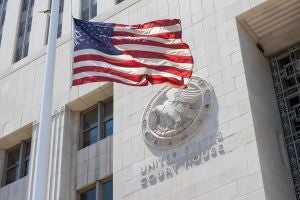
A federal magistrate court is a division of the U.S. district court system where magistrate judges manage various pre-trial and trial responsibilities in civil and criminal cases. These duties include issuing warrants and conducting initial hearings for felony cases.
Appointed by district judges, magistrate judges help alleviate the caseload for district judges by handling cases that might otherwise cause delays, enabling district judges to concentrate on more complex cases such as felony trials.
Understanding the function of a federal magistrate court is important. The proceedings that take place here can significantly influence the course of a federal criminal case, giving you the ability to navigate the legal process with confidence and effectiveness.
Depending on the circumstances of your case, a skilled federal criminal defense attorney can often work for a resolution of your case at this preliminary stage. This possibility offers a ray of hope, potentially avoiding the need for a full-fledged federal trial in district court.
Key Takeaways
- A federal magistrate judge supports district judges by managing pretrial issues and minor cases, including issuing warrants, conducting arraignments, and presiding over misdemeanor trials.
- Appointed by district judges, these officials hear civil cases and perform duties such as mediations and overseeing discovery. However, they do not handle felony criminal trials or sentencing.
- Their duties in criminal cases include issuing arrest and search warrants, conducting initial appearances, and holding detention hearings.
- They hold trials for misdemeanors and petty offenses, conduct hearings for minor offenses, and establish sentences with the defendant's approval.
- They manage pretrial motions and evidentiary hearings, offering recommendations to the district judge on matters such as motions to suppress.
An Overview of Federal Magistrate Courts
Federal magistrate courts are a component of the U.S. district courts, established by the Federal Magistrates Act of 1968 to assist U.S. district judges with various judicial duties. Magistrate judges are appointed by the active district judges of a particular court and serve for renewable eight-year terms.
While magistrate judges handle certain preliminary matters in civil cases, their role in the federal criminal justice process is particularly significant. They are authorized to preside over many of the initial, critical stages of a criminal prosecution.
Their jurisdiction includes issuing search warrants, arrest warrants, and summonses, as well as handling the early court proceedings that follow an arrest.
The Role of the Magistrate Court in Federal Criminal Cases
If you have been arrested for a federal offense, your first appearance in court will almost certainly be before a U.S. magistrate judge. This is where the formal legal process begins. Key proceedings handled by magistrate judges include:
- Initial Appearance: Shortly after a federal arrest, the defendant is brought before a magistrate judge. During this hearing, the defendant is informed of the charges against them, advised of their constitutional rights-including the right to remain silent and the right to an attorney-and the issue of legal representation is addressed. If the defendant cannot afford an attorney, the magistrate judge may appoint one to represent them.
- Detention and Bail Hearings: The magistrate judge determines whether the defendant will be released from custody pending trial or detained. This is a critical stage. The judge will consider factors such as the nature of the alleged offense, the defendant's criminal history, their ties to the community, and whether they pose a risk of flight or a danger to the community. The outcome of this hearing dictates whether a defendant will remain free or be incarcerated while their case proceeds.
- Arraignments: After a grand jury returns an indictment, the defendant is formally arraigned. This proceeding may occur before a magistrate judge. The indictment is read, and the defendant enters a plea of guilty or not guilty.
- Preliminary Hearings: For felony cases in which a grand jury indictment was not first sought, the magistrate judge may conduct a preliminary hearing. In this proceeding, the prosecution must present evidence to establish 'probable cause' that a crime was committed and that the defendant committed it. 'Probable cause' is a legal standard that means there is enough evidence to suggest that a crime was likely committed. If the judge finds probable cause, an indictment will be issued. (If a grand jury votes to indict, the preliminary hearing is unnecessary.)
- Misdemeanor and Petty Offense Cases: With the consent of the defendant, magistrate judges can preside over the trial, plea, and sentencing for all federal misdemeanor and petty offense cases. This means they can act as the judge and jury, hear evidence, and impose a final sentence if the defendant is found guilty.
The Importance of Experienced Legal Representation
The initial stages of a federal criminal case in a magistrate's court are not mere formalities. The decisions made during these proceedings can have lasting consequences. This is why securing representation from an experienced federal criminal defense attorney from the very beginning is of the utmost importance.
An effective attorney can take several crucial actions during these early phases to protect your rights and work toward a more favorable outcome.

During the initial appearance and bail hearing, your attorney can present compelling arguments for your release. They can gather and present evidence of your community ties, employment, and family responsibilities to counter the prosecution's arguments for detention.
Your family's support and their ability to provide evidence of your community ties can be crucial in this stage. Securing pretrial release allows you to better assist in your own defense and maintain stability in your personal life.
Second, at a preliminary hearing, a skilled defense attorney can challenge the prosecution's evidence and cross-examine witnesses. This can reveal weaknesses in the government's case early on. While the standard of proof for probable cause is low, a strong challenge at this stage can sometimes lead to a dismissal of charges or provide valuable information for future defense strategies.
Finally, an attorney provides essential counsel, ensuring you understand the proceedings, your rights, and the potential consequences of every decision. They will handle communications with prosecutors and investigators, protecting you from making statements that could be used against you.
Having a knowledgeable attorney navigate the complexities of the federal magistrate court provides the best opportunity to lay the groundwork for a strong defense. For more help, contact our federal criminal defense law firm at Eisner Gorin LLP in Los Angeles, CA.
