
Federal arson under 18 U.S.C. § 844(i) is one of the most aggressively prosecuted white-collar and property crimes in the federal justice system. The statute penalizes intentionally damaging or destroying commercial property used in interstate commerce using fire or explosives.
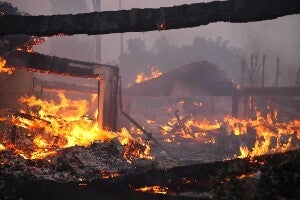
When a multimillion-dollar commercial development, distribution warehouse, retail center, or industrial facility is destroyed by fire, real estate developers, property owners, and corporate executives often face immediate federal scrutiny.
If law enforcement suspects a financial motive—such as recovering insurance payouts to cover defaulting construction loans or stalled redevelopments—a catastrophic property loss can rapidly escalate into a high-stakes federal criminal investigation led by the Bureau of Alcohol, Tobacco, Firearms and Explosives (ATF).
What Key Issues Drive Federal Commercial Arson Defense Cases?
|
Core Legal Issue |
Investigative Focus |
Legal Defense Strategy |
| Origin & Cause | ATF alleges incendiary burn patterns or accelerants. | Apply NFPA 921 standards to prove accidental ignition. |
| Financial Motive & Fraud | Prosecutors claim loan defaults or policy updates show intent. | Establish lender-mandated coverage and valid business decisions. |
| Executive Liability | Federal agents link corporate officers to the fire scene. | Prove delegated authority and absence of criminal conspiracy. |
Who Can Face Federal Arson Charges Following a Commercial Property Fire?
Federal arson investigations may target individuals who own, manage, or control commercial property, particularly when investigators identify a possible financial incentive to destroy it.
Potential defendants include:
- Commercial real estate developers: Managing principals overseeing distressed construction projects, delayed developments, or redevelopment financing
- Commercial property owners: Majority shareholders or managing members of limited liability companies holding warehouses, office buildings, or shopping centers
- Real estate investment executives: Chief Investment Officers and Managing Directors responsible for acquisition, redevelopment, and disposition decisions
- Development company officers: Chief Executive Officers and Chief Financial Officers overseeing construction budgets, commercial insurance, and lender relationships
- Property management executives: Regional Directors or Chief Operating Officers responsible for building maintenance, security, and contractor access
A property's ownership structure can complicate the investigation. A developer may control the investment through several entities while delegating construction supervision and maintenance to outside contractors.
Investigators may examine each individual's authority over the property, access to the premises, and involvement in decisions preceding the fire.
What Must Federal Prosecutors Prove Under 18 U.S.C. § 844(i)?
Under 18 U.S.C. § 844(i), federal prosecutors must establish several elements beyond a reasonable doubt:
- The defendant damaged, destroyed, or attempted to damage or destroy a building or other covered property
- The conduct involved fire or explosives
- The defendant acted maliciously, meaning intentionally or with willful disregard of the likelihood of resulting damage
- The property was used in interstate or foreign commerce or in an activity affecting interstate or foreign commerce
Prosecutors do not need to establish that the defendant personally ignited the fire if evidence supports criminal responsibility through another person's actions.
How Do Federal Investigators Determine Whether a Commercial Fire Was Deliberately Set?
ATF origin-and-cause investigators collaborate with local fire marshals, forensic laboratories, and private insurance origin specialists to evaluate commercial fire scenes.
Investigators analyze physical burn patterns, electrical equipment, surveillance camera feeds, entry loggers, and witness statements. They also sample debris for chemical accelerants or signs of multiple independent ignition points.
However, commercial fire scenes present severe forensic challenges. Collapsed structural components, high fuel loads, stored industrial chemicals, and heavy firefighting suppression efforts can distort physical evidence and yield misleading burn patterns.
Forensic Standards and NFPA 921
To challenge flawed federal origin determinations, defense teams rely on NFPA 921: Guide for Fire and Explosion Investigations. NFPA 921 sets the scientific standard for evaluating origin and cause.
It strictly requires investigators to apply the scientific method—testing hypotheses against physical evidence rather than relying on intuition or outdated "arson rules of thumb."
When federal agents classify a fire as incendiary without systematically ruling out accidental causes, independent defense experts can challenge those findings under established scientific frameworks.
Can Electrical Failures or Construction Defects Support an Arson Defense?
Electrical failures, defective construction equipment, and unsafe temporary power installations can cause extensive commercial property fires.
These possibilities deserve particular attention at redevelopment sites where contractors modify electrical systems, replace mechanical equipment, or operate temporary generators. Potential accidental ignition sources include:
- Overloaded electrical circuits and temporary construction wiring
- Defective transformers, switchgear, or electrical distribution panels
- Improperly installed heating and ventilation equipment
- Welding operations and other construction activities producing sparks
- Combustible materials stored near electrical or mechanical equipment
A forensic electrical engineer may examine damaged components, prior maintenance complaints, equipment specifications, and contractor installation records.
An independent certified fire investigator can also evaluate whether the original investigation adequately considered those causes.
When Can a Commercial Arson Investigation Lead to Insurance Fraud Charges?
When investigators suspect that a commercial property was deliberately set on fire, they may examine whether the owner intended to profit from an insurance claim. This can lead to an insurance fraud investigation alongside federal arson allegations under 18 U.S.C. § 844(i).
Investigators may focus on:
- Substantial increases in property insurance coverage shortly before the fire
- Overdue construction loans or pending foreclosure proceedings
- Inflated repair estimates or allegedly fabricated business interruption losses
- Emails discussing insurance payouts, demolition expenses, or financial difficulties
- Alleged false statements submitted during the insurance claims process
If investigators uncover evidence of an intentional scheme to defraud an insurer, prosecutors may pursue additional federal charges including mail fraud under 18 U.S.C. § 1341, or wire fraud under 18 U.S.C. § 1343.
However, financial difficulties, increased insurance coverage, or disputed property valuations do not, by themselves, establish fraudulent intent. For example, a Chief Financial Officer who submits an insurance claim with inaccurate contractor estimates may have reasonably relied on information supplied by outside professionals.
A qualified criminal defense team can examine financial records, insurance documentation, and internal communications to determine whether investigators have mistaken legitimate business decisions or reporting errors for deliberate fraud.
What Are the Federal Penalties for Commercial Property Arson?
Penalties under 18 U.S.C. § 844(i) carry severe mandatory minimums and long statutory prison terms:
|
Offense Category |
Federal Prison Sentence |
Financial Exposure |
| Arson (No Resulting Injury) | 5 to 20 years | Statutory fines up to $250,000 |
| Arson Resulting in Personal Injury | 7 to 40 years | Fines, mandatory restitution, forfeiture |
| Arson Resulting in Death | Up to Life Imprisonment or the death penalty | Maximum fines and full estate restitution |
| Attempted Arson | Subject to the same penalties as the completed offense | Fines, restitution, asset forfeiture |
Note: Related mail and wire fraud charges carry maximum sentences of up to 20 years in prison per count (or up to 30 years if the fraud affects a financial institution). Prosecutors may also seek criminal forfeiture of property and proceeds under 18 U.S.C. § 981.
What Related Federal Laws Impact Commercial Arson Investigations?
Understanding related statutory provisions is critical because federal prosecutors frequently stack additional felony counts onto arson indictments to increase sentencing exposure and leverage settlement negotiations.
-
Mail Fraud (18 U.S.C. § 1341): Penalizes using the United States Postal Service or commercial interstate carriers to execute a scheme to defraud an insurer or lender, carrying up to 20 years in prison per count.
-
Wire Fraud (18 U.S.C. § 1343): Applies to using electronic communications, wire transfers, emails, or digital insurance claims during an alleged fraudulent scheme, carrying up to 20 or 30 years in prison.
-
Conspiracy to Commit Arson or Defraud (18 U.S.C. § 371): Makes it a separate federal felony for two or more corporate officers, owners, or third parties to plan, assist, or coordinate a commercial fire or insurance fraud scheme.
-
False Statements to Federal Agents (18 U.S.C. § 1001): Criminalizes knowingly making false, misleading, or incomplete statements or submitting falsified documents to ATF agents or federal investigators, carrying up to 5 years in prison.
-
Obstruction of Justice (18 U.S.C. § 1519): Outlaws destroying, altering, concealing, or falsifying records, surveillance feeds, or financial documents with the intent to impede a federal investigation, carrying up to 20 years in prison.
Hypothetical Case Study: Federal Arson Investigation into a $48M Industrial Redevelopment
The Situation: The Managing Principal of a commercial development firm oversaw the $48 million conversion of an aging industrial warehouse into a logistics hub.
The project ran six months behind schedule, and a $31 million construction loan was approaching maturity without secured refinancing. Three weeks before a mandatory lender meeting, a major fire destroyed the structure.
The Federal Investigation: ATF agents identified burn patterns they classified as incendiary. Suspicions grew after agents discovered that the Managing Principal had recently increased insurance coverage and discussed building demolition costs in emails.
After the company filed a $19 million insurance claim, federal prosecutors issued subpoenas for financial records, contractor communications, and surveillance records, noting that security cameras had been disconnected prior to the fire.
The Defense Strategy: The developer retained experienced federal criminal defense counsel at Eisner Gorin LLP while the investigation was active. Defense counsel hired an independent certified fire investigator and a forensic electrical engineer to re-examine the scene and ATF data.
-
Forensic Findings: Independent experts discovered severe arc mapping and thermal degradation in a temporary electrical distribution panel installed by a subcontractor. Subcontractor logs confirmed prior complaints of electrical tripping and burning odors.
-
Rebutting Fraud Allegations: Counsel produced lender correspondence proving the increased insurance coverage was explicitly required under modified loan terms. Architectural records showed camera removal was part of a planned main-panel upgrade project.
The Outcome: Defense counsel presented these forensic findings and financial records to the United States Attorney's Office. Recognizing that accidental electrical ignition could not be ruled out and that legitimate business documentation supported the financial decisions, federal prosecutors declined to file criminal charges.
Frequently Asked Questions (FAQs)
Understanding these key questions is essential for commercial property owners and executives to navigate high-stakes federal investigations and safeguard their legal rights.
What is the difference between state arson and federal commercial arson?
State arson charges are prosecuted in state courts and generally apply to any intentional burning of real property. Federal arson under 18 U.S.C. § 844(i) specifically requires the property to be used in or affecting interstate or foreign commerce, which encompasses almost all commercial real estate. Federal cases involve investigative agencies like the ATF and are prosecuted by Assistant U.S. Attorneys under strict federal sentencing guidelines.
Can I be charged under 18 U.S.C. § 844(i) if I did not physically set the fire?
Yes. Under federal conspiracy under 18 U.S.C. § 371 and aiding and abetting under 18 U.S.C. § 2, anyone who hires, solicits, plans, or assists another individual in setting a commercial fire faces the exact same statutory penalties as the person who physically ignited it.
How does the ATF determine if a commercial fire was accidental or arson?
ATF origin-and-cause investigators evaluate physical burn patterns, arc mapping on electrical lines, chemical residue samples, structural fuel loads, and security footage. Qualified investigations must follow the scientific method outlined in NFPA 921 to systematically eliminate potential accidental causes—such as electrical failures, heating equipment, or subcontractor operations—before declaring a fire incendiary.
Can increasing insurance policy limits before a fire be used as evidence of arson?
While prosecutors often cite recent insurance policy increases as evidence of financial motive, an increase alone does not prove criminal intent. Real estate developers frequently adjust insurance coverage to satisfy lender requirements, reflect rising construction costs, or protect updated property valuations. Demonstrating a legitimate business reason for policy changes effectively rebuts inferences of fraud.
What should a property owner do if contacted by federal agents after a commercial fire?
If ATF agents, federal prosecutors, or grand jury subpoenas target a commercial property owner or executive after a fire, refrain from making unrepresented statements or providing documents without legal guidance. Contact a qualified federal criminal defense attorney immediately to handle all communications with law enforcement and protect your rights.
Speak to a Federal Defense Lawyer for Help
If you, your executive team, or your development firm are under investigation by the ATF or federal prosecutors following a commercial property fire, immediate legal intervention is critical.
Early engagement allows a defense team to secure independent forensic evaluations, preserve scene evidence, and address federal inquiries before indictment decisions are finalized.
Our legal team at Eisner Gorin LLP defends commercial property owners, developers, and corporate officers against complex federal charges under 18 U.S.C. § 844(i), parallel insurance fraud allegations, and white-collar grand jury investigations.
Contact our offices to schedule a confidential consultation regarding your case.
